
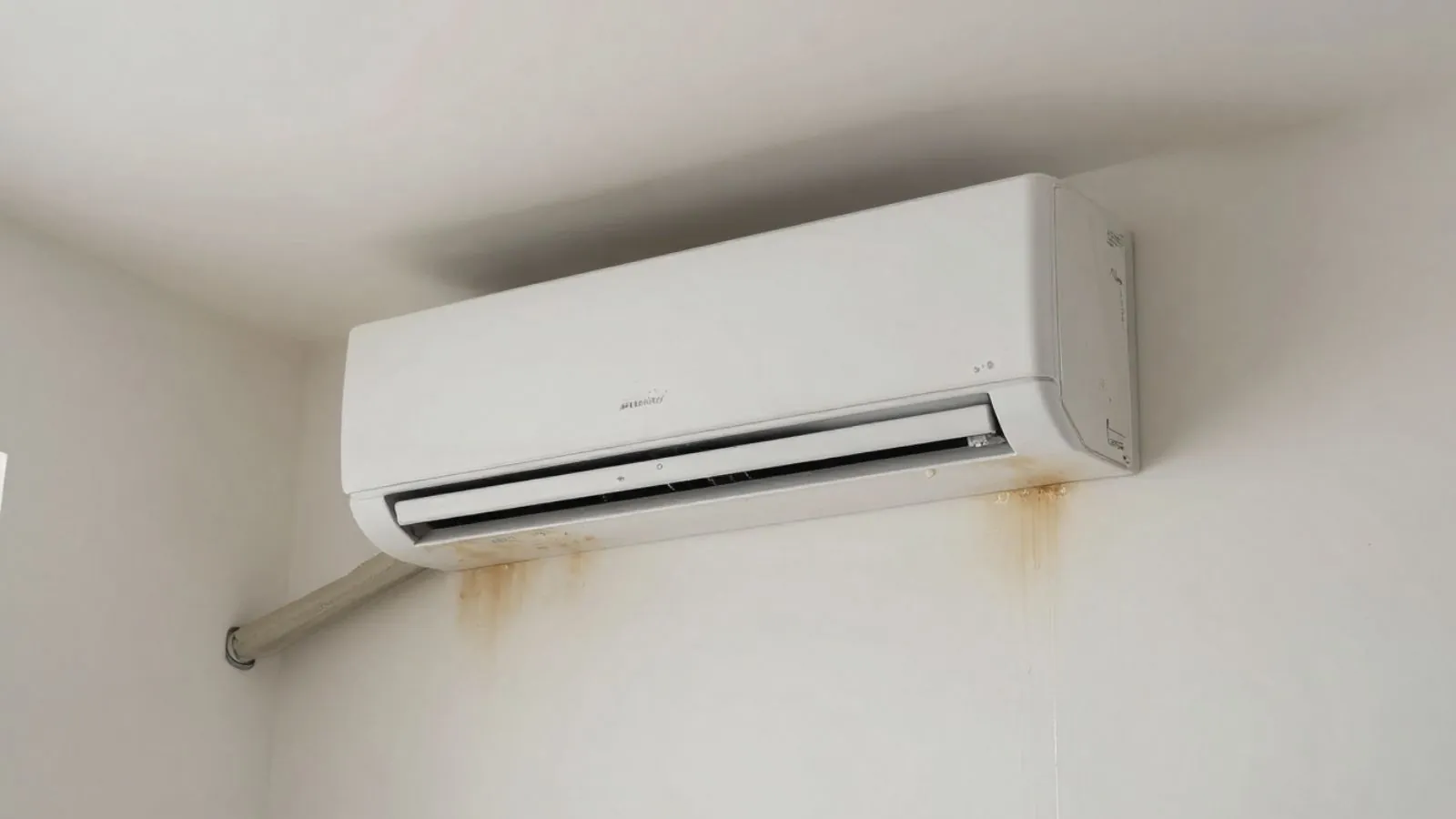
Condensate that escapes a cooling system and soaks ceilings, walls, insulation and floors is what AC leak water damage means. Every air conditioner pulls moisture out of the air as it cools, and that water is meant to run through a drain line to a safe discharge point. When the line clogs or the pan underneath cracks, the water goes into the building instead.
Most of these leaks are quiet. A closet floor feels cool and damp, a ceiling gets a faint brown ring, or the secondary pan in the attic fills to the rim without anyone looking. This page covers what is happening inside the system, how we find and dry the wet materials, and where the HVAC contractor's job ends and ours begins.
How condensate ends up inside the house
The indoor coil gets cold, and humid air passing over it drops water into a drain pan. From there a PVC line carries it outside or to a drain. Over a season, algae and sludge build up in that line until it slows to a trickle and then stops.
Once the line is blocked, the pan fills and overflows. If the air handler sits in an attic, the water lands on the ceiling drywall below. If it sits in a closet or utility room, it runs across the floor and wicks into the base of walls. Some units also have a float switch that shuts the system off when the pan is full, and a switch that has failed or been bypassed lets the overflow run for days.
Signs the water is coming from the AC
A few clues separate a condensate leak from a roof or supply pipe leak:
- The stain appears or grows only while the cooling system is running.
- The wet spot sits under or beside an attic or closet air handler.
- The water is clear or slightly cloudy, with a stale smell rather than a sewage smell.
- The drain pan in the attic or closet is full, rusted through or holding slime.
- Rooms near the air handler feel muggy even though the system is on.
- The ceiling stain has a ring pattern that darkens after a hot spell.
Questions about your situation? Call the 24/7 line and describe what you see.
☎ Call (516) 845-9582A calm look at a typical call
Callers often describe the same situation: the condensation line is backing up, or there is a wet spot in a closet that keeps coming back after being wiped. The first step is to shut the system off at the thermostat so no more water is made. If the pan is accessible and safe to reach, a wet vacuum can lower the level while you wait.
We do not clear the drain line ourselves unless it is part of drying out the area. An HVAC contractor flushes or replaces the line, tests the float switch and checks the coil. Our work starts with the wet building materials.
How the damage is assessed and dried
The sequence is the same whether the leak ran for an afternoon or a month.
Map the wet area
Readings along the ceiling, wall base and floor, plus a thermal image, reveal how far the water went past the visible stain.
Open what has to open
Wet ceiling drywall and saturated insulation are removed. Drywall that is only damp but intact may be dried in place.
Extract standing water
Extraction units pull water from carpet, pad or flooring so the drying equipment is not fighting a wet floor.
Set drying equipment
Air movers and LGR dehumidifiers run in a closed area, following the approach in ANSI/IICRC S500.
Log and confirm
Readings are recorded daily until framing and finishes return to a dry standard, then the equipment comes out.
Repair options and what each costs you in trade-offs
What gets dried and what gets replaced depends on how long the leak ran and what it soaked.
| Option | Works well when | Trade-off |
|---|---|---|
| Dry in place | Drywall is damp but firm and clean | Needs close monitoring, and a missed pocket can stay wet |
| Cut out and replace a section | Ceiling is stained, sagging or soft | More dust and a patch to paint, but the cleanest result |
| Replace insulation only | Attic insulation soaked, drywall intact | Quick to do, yet staining on the ceiling below may remain |
| Remove flooring or baseboard | Water wicked into closet floors and wall bases | More demolition, but it exposes wet cavities that would otherwise hide |
When a condensate leak turns into a mold question
Mold needs moisture, so the leak comes first and the mold question second. If a ceiling has been damp for a long stretch, you may see dark spotting or smell something musty. Fix the water source, dry the materials, and then decide whether mold work is needed.
Assessing mold and removing it are separate licensed jobs in New York, and one person cannot do both at the same address. If growth is visible or the dampness was long-running, see mold remediation for how that process is separated from drying. We make no health claims, so questions about symptoms belong with a physician.
What shapes the cost of an AC leak cleanup
The scope and price are put in front of you ahead of any work. These are the factors that move the number:
Water category
Clean condensate is usually Category 1, but long standing water in a dirty pan can slip to Category 2.
Area affected
One ceiling bay costs less to handle than a ceiling, a wall and a closet floor.
Materials involved
Drywall, plaster, carpet pad and hardwood each dry and fail differently.
Drying days
More wet material means more equipment and more days of monitoring.
Rebuild scope
Patching, texturing and painting are separate from drying and depend on what was removed.
Does insurance cover an AC leak?
Insurers may treat a sudden overflow as accidental damage, while a drip over many months can be viewed as maintenance. Each policy reads differently, so ask your insurer how condensate overflow is handled. The New York DFS advises photographing and recording damage before cleaning and keeping receipts for emergency work.
Wait for the insurer's inspection before rebuilding anything. If the leak started with a failed pan or line, keep the old part if you can. Appliance leaks such as a washer hose are handled the same way for claim purposes.
Port Washington homes and where the water hides
Port Washington has mixed housing, from older homes with attic air handlers to newer builds with closet units, so the hiding places vary from house to house. Call the 24/7 line and describe where the unit sits, and we will plan the drying around that.
If you are nearby in Roslyn Heights, the same process applies. Our page on Roslyn Heights water damage covers that area. Once the ceiling is open and wet, ceiling water damage repair explains the patching side, and structural drying describes the equipment in more depth.
Frequently asked questions
Can I keep running the AC after finding a leak?
Turn it off until the drain line is cleared. Running it keeps making condensate, and a blocked line sends all of it into the ceiling or closet.
How do I know if the stain is from the AC or the roof?
A stain that grows only when the system runs, sits under an air handler, and follows hot days points to condensate. A roof leak tends to follow rain instead.
Will you unclog the condensate line?
That is an HVAC contractor's job, along with the float switch and coil check. We dry the wet building materials, and many people book both so the leak is fixed and the damage is handled.
Is a wet closet floor something to worry about?
Yes, even a small wet spot, because water wicks into the wall base and flooring underneath. Moisture meters tell us how far it went.
How long does drying take?
That comes down to the materials involved, how long they stayed wet and the state of the home. We read moisture daily and release the equipment once readings reach the dry standard.
Will the ceiling stain come back after drying?
Drying stops the damage but may not remove staining. Stained drywall is often sealed and repainted or replaced, depending on its condition.
Ready to talk it through? Call the 24/7 line.
☎ Call (516) 845-9582