
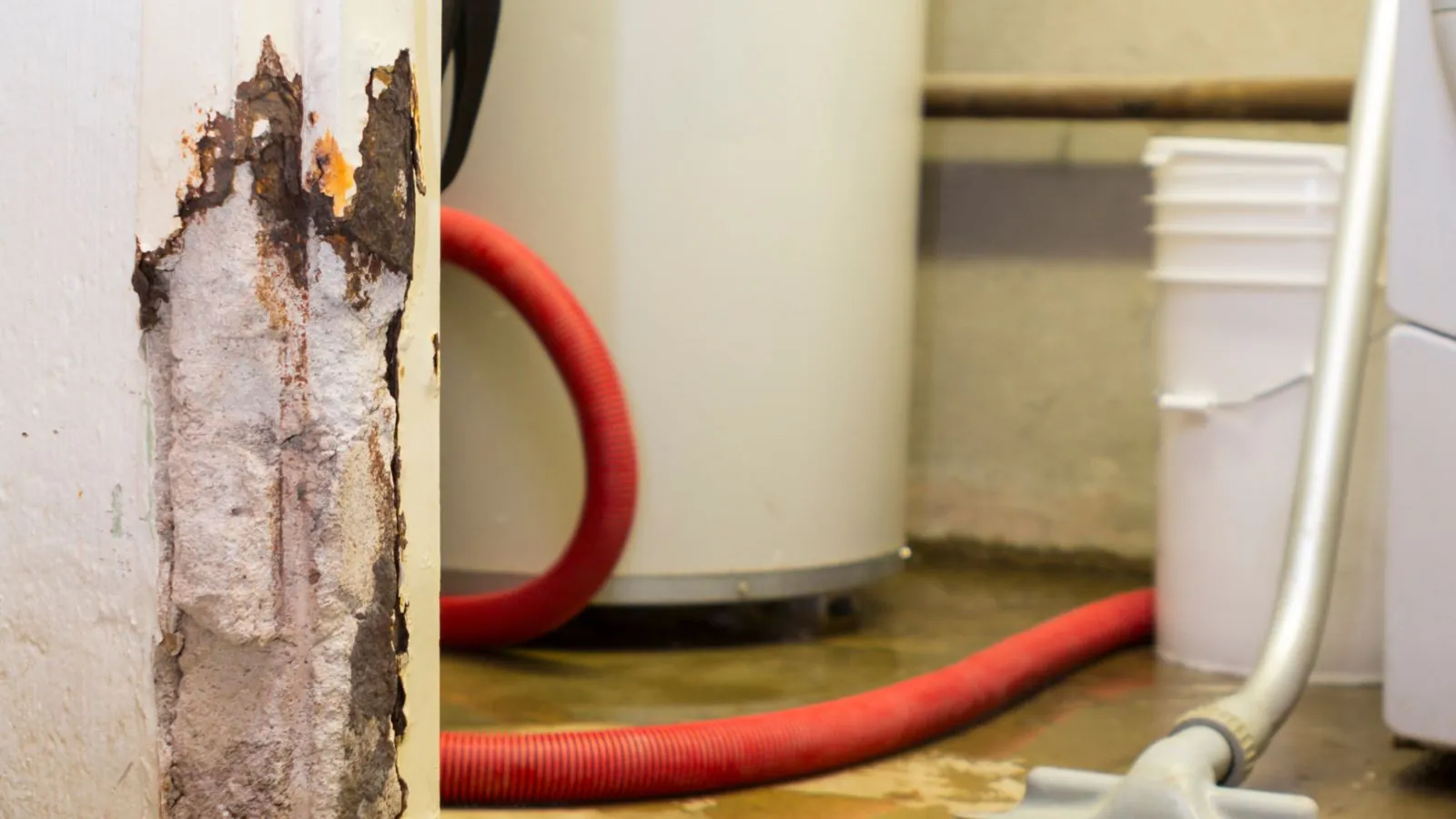
Emergency water extraction means pulling standing water off your floors with pumps and extraction units before it soaks into pad, framing and drywall. Call the 24/7 line the moment water is pooling. While you wait, stop the source if you can, stay out of any room where water reaches outlets or the panel, and lift rugs, cords and small furniture out of the water.
Every hour water sits, it wicks further into carpet backing, baseboards and the bottom of the wall. Dispatch is built around same-day response when available, because the puddle you can see is the easy part. The moisture you cannot see is what extraction exists to stop from spreading.
Standing water in the house right now
These steps are safe for most homeowners and make the extraction visit shorter and cheaper.
- If something is still pouring, close the fixture valve or the main to stop the supply.
- Avoid switches and outlets in the wet rooms, and treat the breaker as a last resort that depends on a dry panel and dry footing.
- Move rugs, cords, books and small furniture to a dry room so nothing wicks water upward.
- Record the source, the water line and the soaked items on your phone before furniture gets shifted.
- Open interior doors so a restoration crew can reach the lowest point without dragging hoses through the house.
- Do not run a household vacuum on the water, and do not walk through deep water in the basement.
Truck-mounted or portable, and how depth decides
Two kinds of extraction equipment do most of the work. A truck-mounted unit sits outside and pulls through long hoses with strong suction, while portable units come inside and work room by room. Depth, floor type and access decide which one goes where.
| Water depth | Usual method | Trade-off |
|---|---|---|
| A film to about an inch | Portable extractor with a wand | Fast and gentle on finished floors, but misses water trapped in pad |
| Several inches | Submersible pump first, then wand passes | The pump clears bulk water, the wand finishes what the pump cannot reach |
| Basement standing a foot or more | Pump out in stages, then extraction units | Lowering water too fast can stress walls, so it is done in steps |
| Water on stairs and multiple levels | Truck-mounted unit with long hose runs | Strong suction from outside, but hoses need a clear path through the house |
Water still spreading? The 24/7 emergency line is open right now.
☎ Call (516) 845-9582What happens once the crew is at the door
The order matters more than the speed of any one tool.
Check for hazards
Before a pump goes in, the crew looks for live outlets, a wet panel, a gas smell and the water source. Work waits until power is made safe.
Read depth and water category
Water from a supply line is handled one way, and water from a drain or from outdoors is another job entirely. The category decides the protective gear and what can be kept.
Set the pumps
Submersible pumps go in the deepest spot with a discharge hose run outdoors, away from the foundation.
Work the floor in slow passes
Wands go over carpet and hard floors in overlapping lines. Rushed passes leave water in the pad.
Measure what is left
After the pumping, meters and a thermal camera reveal soaked pad, baseboard and lower wall that look fine from above.
What happens to carpet pad and baseboards
Carpet itself can often be extracted and dried in place, but the pad underneath holds water like a sponge and is slow to give it up. Clean water and an early pickup sometimes let the pad stay. If it sat, or the water was gray or worse, the pad is cut out and discarded while the carpet is lifted and dried. See the carpet restoration page for how that decision is made.
Baseboards are checked next. Painted wood trim can often be pulled, dried and reinstalled, but a small gap is drilled or cut at the bottom of the drywall so air can reach the wall cavity. That hole is easy to patch later. A wet wall left sealed is much harder to fix.
When extraction is not enough
Extraction removes water you can pump or vacuum. It does not remove what has soaked into subfloor, framing, drywall and cabinet bases. That moisture stays and keeps spreading until air movers and LGR dehumidifiers pull it out, which is the work described on the structural drying page.
Plan on drying whenever water stood for more than a short time, ran under a wall, or reached a finished basement. The crew will tell you at the end of the extraction visit which materials read wet and what the drying plan looks like.
Water and power do not mix
If water is touching outlets, a power strip, an appliance or the panel, stay out of it. The breaker is for dry hands, dry panel and dry floor only. Gas odor, sparking or a wet panel means you step outside and ring the utility or 911, then us.
What drives the cost of extraction
No two extraction jobs price the same, and the number depends on a few real factors. Water category matters because gray or black water needs more protective gear and disposal. The area and depth of water set the equipment and the hours. Floor materials decide whether pad is saved or removed, and how long drying runs after extraction. If drywall or cabinets must come out, rebuild scope adds to the total.
You hear the scope and the price before any pump is switched on. On the call, describe what the water looks like so the right extraction gear loads up.
A note on insurance
Sudden and accidental water damage, like a supply line that failed overnight, is often covered. Gradual leaks and flood water often are not. Keep the receipts from emergency work and ask your insurer what the policy covers before anyone starts permanent repairs.
Port Washington water from bay to basement
With a bay on one flank and a harbor on the other, the Cow Neck Peninsula keeps shoreline water close. Local roads went under during a downpour in early September 2021, a reminder that standing water can come from outdoors and not only from plumbing. Homes near either shore should be checked against the FEMA flood map.
The same crews work in nearby towns, including Old Westbury, where the village runs its own building department. Large wet areas change the equipment plan, so tell dispatch the approximate size of the wet space and which floors it reached.
Frequently asked questions
Do you handle water extraction emergencies at night or on weekends in Port Washington?
Yes. Calls are picked up at any hour, holidays included. Give the dispatcher an approximate depth and say whether the lights are still on.
How long does it take to remove standing water?
A shallow room can be extracted in a few hours. A flooded basement is slower because pumping is done in stages, and drying follows after the water is gone.
Can my carpet be saved after extraction?
Often yes if the water was clean and extraction started quickly. The pad underneath is more likely to be replaced than the carpet itself.
Is extraction the same as water damage restoration?
No. Extraction is the first phase that removes standing water. Drying, cleaning and repairs come after it.
Should I turn the power off before you arrive?
Only with a dry panel and a dry place to stand. If not, stay clear and let the utility or 911 handle the electrical hazard.
Do I need extraction if the water is only a few inches deep?
Yes. Even shallow water soaks pad, trim and the bottom of walls quickly. A film of water is still a drying job.
Ready to talk it through? Call the 24/7 line.
☎ Call (516) 845-9582