
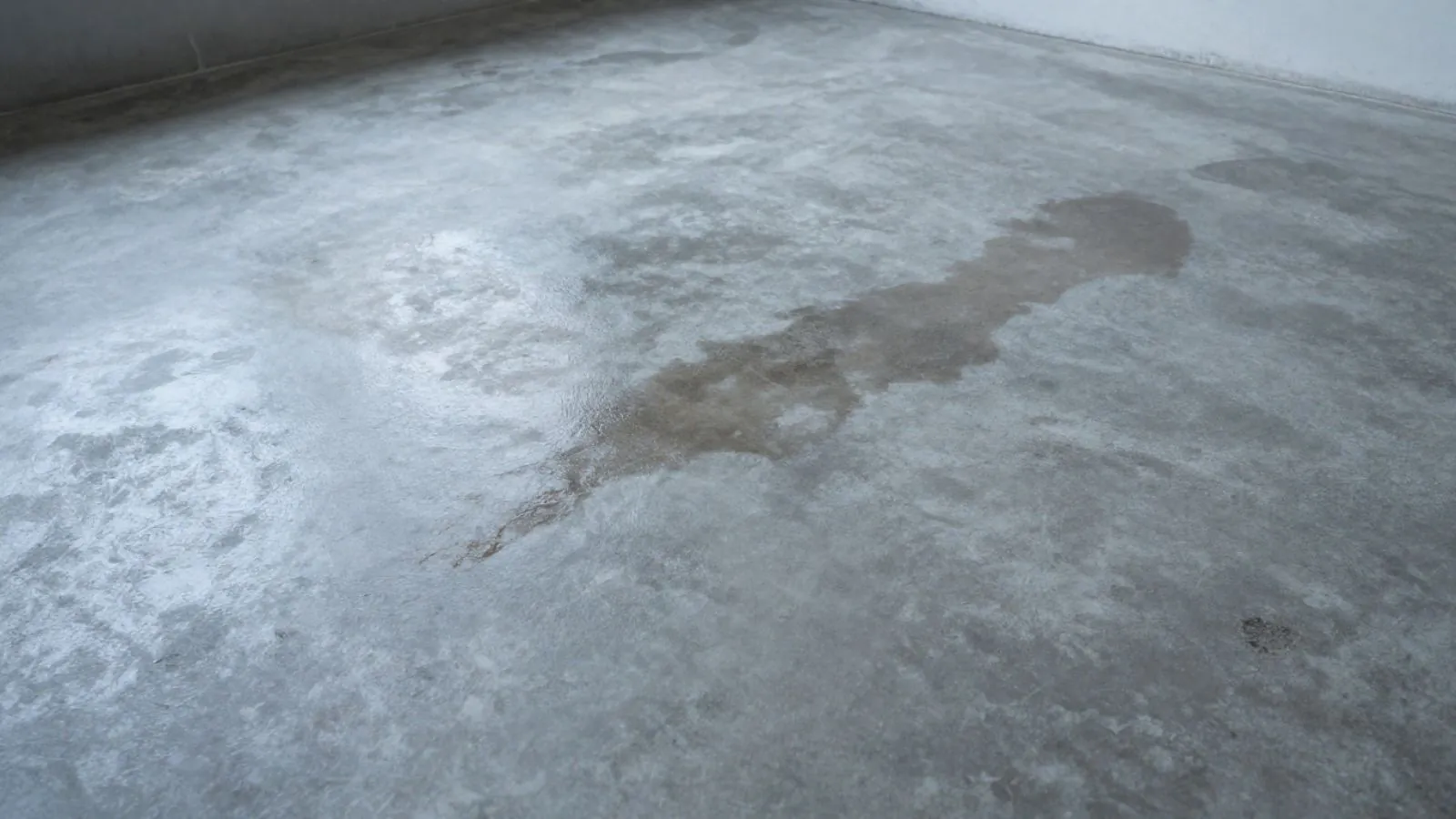
If you think a supply line is leaking under your concrete floor, shut off the main water valve now and call our 24/7 line. While you wait, keep everyone off wet flooring near outlets, move rugs and furniture legs out of the water, and do not run fixtures. A slab leak is a plumbing failure that has become a water damage problem, and the damage grows for as long as the line stays pressurized.
When a pressurized pipe under a concrete floor fails, water reaches the flooring, baseboards, wall bases and the slab itself, and that is slab leak water damage. A licensed plumber locates and repairs the line. Our job is the water that came out of it, from extraction through drying, which is what the rest of this page covers.
Slab leak emergency: what to do right now
Close the main shutoff, usually where the line enters the house or beside the meter. If the floor is warm or wet near the electrical panel, do not touch the panel. Any electrical or gas hazard goes to 911 or the utility before it goes to us.
Take photos and video of the damage before anything is moved, since your insurer will ask. After-hours callers reach the same dispatch as daytime callers, and same-day response is offered when available.
Warm spot on the floor, running water sound, spinning meter
Most people never see the pipe. They notice a warm patch on tile or carpet, a faint hiss of running water when every fixture is off, or a water bill that jumps. Those signs together are what plumbers call a slab leak.
Every connection in the Port Washington Water District is metered, so a meter that keeps moving with all fixtures off is a strong hint. Turn off every fixture and appliance, then watch the meter dial. If it keeps moving, water is going somewhere. Mention that to the plumber, and to us, so the right area is checked.
Water still spreading? The 24/7 emergency line is open right now.
☎ Call (516) 845-9582How a leak under the slab happens
Housing here is mixed, with plenty of basements and crawl spaces alongside slabs, so a slab leak is not the default scenario on this peninsula. When it does happen, one of these mechanisms is usually behind it:
Corrosion
Copper lines can pit from the outside where they touch soil or concrete, or from the inside with aggressive water.
Mineral scale
Hard water, 173 mg/L in the district's April 2025 sample, leaves mineral scale that can narrow supply lines and add stress at joints.
Abrasion
A pipe that rubs against gravel or the slab edge as it expands and contracts can wear through.
Poor joints
A badly soldered or fitted joint can fail years after the slab was poured.
Shifting soil
Ground movement around the slab can strain rigid lines.
Assessment and drying after the plumber finds the line
The plumber's tools include acoustic listening gear and line tracing. Ours begin once the water is stopped.
Confirm the water is off
We check that the line has been isolated or repaired before any equipment is set.
Find the extent
Readings under the flooring and at the base of walls, plus thermal images, show how far the water traveled.
Extract
Extraction units remove standing water from hard floors and carpet. See water extraction for that stage.
Pull what cannot dry
Wet carpet pad, baseboard and lower drywall may come out so air can reach the framing.
Dry the slab and structure
Air movers and LGR dehumidifiers run until moisture meters show a dry standard, with daily readings logged.
Repair choices and their trade-offs
The plumber decides how the pipe is fixed, and each approach changes how much of the floor is affected.
| Plumber's approach | What it means for the floor | Trade-off |
|---|---|---|
| Spot repair through the slab | Concrete is cut over the leak | Fastest, but the old line stays in service and may fail elsewhere |
| Reroute through walls or ceiling | Floor is mostly left alone | More wall and ceiling openings to patch |
| Repipe the house | Slab is left intact | Highest scope, but resolves repeat leaks |
| Epoxy lining | Pipe is coated from the inside | Depends on pipe condition and is not suited to every layout |
Flooring that gets wet when the slab leaks
Water spreads under flooring and finds the lowest or most porous route. Carpet and pad usually need extraction and often replacement, while tile can be fine on top but wet underneath. Engineered flooring over a slab can cup quickly.
For wood floors, our guide to hardwood floor water damage repair describes what can be saved. Water that comes from a failed supply line is clean when it starts, but it does not stay that way once it soaks into old padding. Calls at night or on weekends get the same assessment, so you are not waiting for the weekday to find out how far it went.
What affects the cost of slab leak cleanup
Before the first fan goes in, the scope and price are explained to you. These items decide the total:
- Water category, which is usually Category 1 at the start and changes if the water sits.
- The area wet, from one room to a whole level.
- The flooring and wall materials, since tile, laminate, carpet and hardwood behave differently.
- Drying days and equipment, which grow with the amount of wet material.
- Rebuild scope, including slab cutting and patching if the plumber needs access.
- Whether a burst or sudden failure is involved, as covered in burst pipe water damage.
Insurance and a hidden leak
Timing matters to an insurer: an abrupt failure is often covered, while a leak that ran quietly for a long time often is not. Ask your insurer how it treats the pipe repair itself versus the damage that followed. Take photos before cleanup, save receipts for emergency work, and hold off on permanent fixes until the insurer has looked.
For a leaking slab in a home near Old Westbury, the Old Westbury page describes how crews work in that village. Dispatch can walk you through the next step when you call.
Frequently asked questions
Do you handle slab leak emergencies at night or on weekends in Port Washington?
Yes. Calls to the 24/7 line at night, on weekends and on holidays are dispatched the same way as daytime calls, with same-day response when available. Shut off the main valve first and tell us what you see.
Do you fix the leaking pipe?
No. A plumber locates and repairs the line. Extraction and drying are scheduled around the plumber's visit so neither job holds up the other.
How can I tell if my water meter shows a hidden leak?
Turn off all fixtures and appliances, then watch the meter. If the dial or low-flow indicator keeps moving, water is flowing somewhere.
Are slab leaks common in Port Washington?
Not especially. Housing is mixed and many homes have basements or crawl spaces. When a home does have a slab, the same failure mechanisms apply.
Will the concrete slab need drying too?
Often yes, since concrete holds moisture. We measure it and run dehumidifiers until readings come down, and we do not promise a set number of days.
Is a warm floor always a slab leak?
No. Radiant heat, sunlight and ductwork can also warm a floor. A warm spot plus a moving meter with fixtures off is a stronger sign.
Ready to talk it through? Call the 24/7 line.
☎ Call (516) 845-9582