
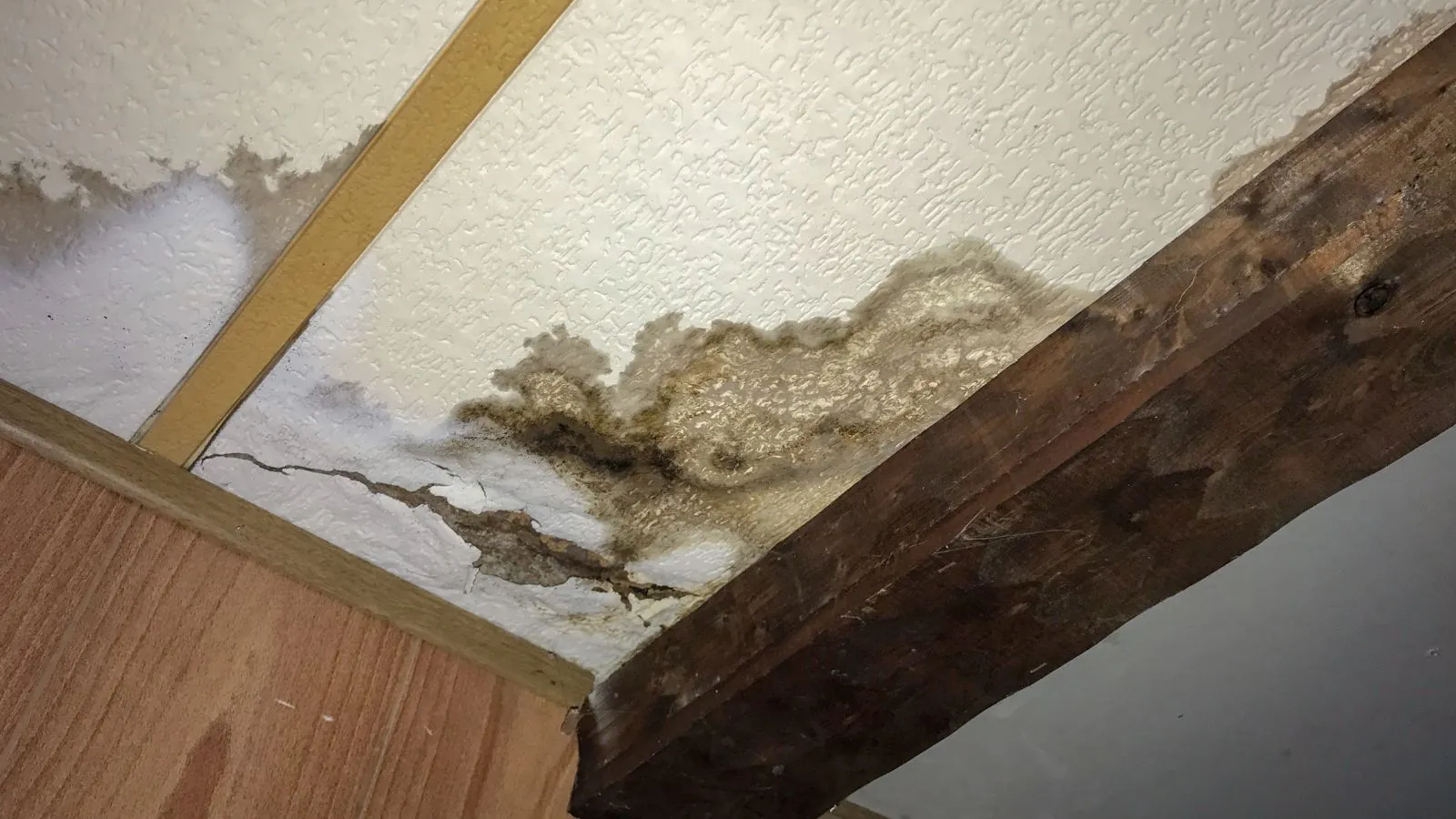
Ceiling water damage is moisture in a finished ceiling from a leak above it, whether the source is a bathroom, a pipe, an appliance, the roof or an HVAC line. If it is dripping, bulging or sagging, call the 24/7 line. Until crews arrive, stay clear of the sagging area, set a bucket under any drip, slide furniture aside, and kill the room's power only if you can reach a dry panel.
The stain you see is only the lowest point. Water travels along joists and pools in insulation, so the wet area above is usually bigger than the mark below. A good assessment finds the source, the size of the wet cavity and whether the board can be dried or has to be replaced.
A ceiling is dripping or sagging right now
Do the safe things first and leave the rest to the crew.
Step away from the sag
A bulging ceiling can hold gallons of water and drop without warning. Do not stand under it.
Stop the source if you can
Shut the water supply to an upstairs fixture or close the main if you know which line is leaking.
Relieve a bulge only from a safe spot
If a ceiling has a bulge, a small hole made with a screwdriver on a long handle, standing to the side, lets water drain into a bucket.
Cut power to the room
Water in a ceiling can reach a light fixture or wiring. Skip the breaker if you would have to wade or reach across wet floor to get to it.
Photograph the damage
Take photos before cleanup for your insurer.
Collapse and wiring risk
A wet ceiling can come down, bringing wet insulation and drywall with it. Do not push on it, and do not use a ladder under a sag. Ceiling lights and fans can carry current through wet material. A burning smell, sparks or gas odor sends you outside to call 911 or the utility, and the restoration line comes after.
Water still spreading? The 24/7 emergency line is open right now.
☎ Call (516) 845-9582What is above your ceiling
Most ceiling leaks start in one of a few places. The source decides the repair.
Upstairs bathroom
A supply line, shower pan, toilet seal or tub overflow can drip for days before a stain shows.
Upstairs closet
A washer or water heater in an upstairs closet can leak through the floor and into the room below.
HVAC and attic lines
Condensate lines, a clogged drain pan or a burst pipe in the attic can wet the ceiling below.
Plumbing in the floor system
A pinhole in a supply line between floors soaks the cavity slowly.
Roof and flashing
Rain that gets past the roof covering is covered in its own section below.
Stain rings and what they say
A brown ring with a darker edge usually means water has dried and come back more than once. A fresh stain looks like a damp, darker spot with no ring. Multiple rings on the same spot tell you the leak is recurring.
A stain that spreads after the leak is stopped can mean the insulation above is still wet. Paint over a wet ceiling traps moisture and hides the problem, so the stain should be tested first.
Dry the cavity or replace the board
Whether the board is dried or replaced comes down to how many hours it sat wet and what kind of water it was.
| Condition | Likely approach | Trade-off |
|---|---|---|
| Light stain, clean water, caught early | Dry in place with air movers | Cheapest, but needs readings to confirm it is dry |
| Soft or bubbled drywall | Cut out and replace the section | Faster than waiting for it to fail, and the patch needs finishing |
| Wet insulation above | Remove and replace insulation | Wet insulation holds water for a long time |
| Sagging or collapsed board | Remove the whole section | Safest, with a larger repair |
| Dirty water or a long leak | Remove and check for mold | More work, with testing if growth is suspected |
How the ceiling is assessed and dried
Readings along the ceiling plane and a thermal image reveal where the wet area stops, including patches that still look dry under fresh paint. If the cavity is open, air movers and LGR dehumidifiers dry it, using the methods described on the structural drying page. If the same water ran down inside a wall, the wall and drywall repair page picks up from there.
If readings suggest growth, the mold remediation page explains how New York licensing works. Mold work on one property needs two separate licensed people, one to assess and one to remediate.
Roof leaks and ceiling stains
Roof water damage often shows up first as a ceiling stain, sometimes far from the actual opening. Water from a roof leak runs along rafters and drops where the framing allows it. A stain in a top-floor ceiling after rain is a typical sign of roof leak water damage.
We restore the interior, and a roofer fixes the roof. Both are needed, and they can be scheduled separately. Interior drying should not wait for the roof repair, because wet insulation and drywall keep spreading moisture while the roofer finds a day to work.
Water damage from a roof leak is often larger than the stain suggests, so the attic side gets checked too. Ask your roofer for a written scope and photos of the opening, which also help your insurer. Roof water damage repair on the inside includes removing wet insulation, drying the framing, and patching the ceiling after the roof is sealed. If rain is expected before the roof is fixed, a temporary tarp from the roofer protects the work.
Cost factors for ceiling repairs
Five things set the size of the job.
- Water category: clean supply water costs less than dirty or long-term seepage.
- Affected area: a single stain is small, and a whole room ceiling is larger.
- Materials: drywall, plaster, textured finish and insulation are handled differently.
- Equipment and drying days: air movers and dehumidifiers stay in place until the ceiling cavity reads normal.
- Rebuild scope: patching, texture matching, priming and paint. Ring the 24/7 line, and the scope and price come before any ceiling is opened.
Upstairs closet and bathroom scenarios
A typical call involves a washer or water heater in an upstairs closet that let go overnight. Water finds the floor penetration for the pipes and runs down the wall cavity, then shows up as a ring in the ceiling below. The closet floor, the wall and the ceiling all need to be checked, not just the stain.
The bathroom version is a slow tub or toilet seal leak. The ceiling below may be soft long before it stains, so press gently around the mark with a gloved hand from a safe spot. If it feels spongy, the board has to come out.
Insurance for ceiling leaks
A sudden pipe or appliance failure above a ceiling is often covered, while a slow leak that went on for months often is not. Roof damage from storms may follow a different rule than interior plumbing. Take pictures of the stain before anyone cleans it, keep your receipts, and talk to your insurer.
Ceiling calls near Port Washington
Ceiling leaks often start late at night when someone leaves a tub running. Evening and weekend calls are answered, with a same-day visit possible if the schedule allows. The same service reaches homes in Roslyn Heights, and calls from there are taken the same way. A structural repair above the ceiling may need a permit, so ask Town Hall or your village office.
If the leak came from an upstairs washer, the appliance leak page covers the source in detail.
Frequently asked questions
Do you handle ceiling water damage emergencies at night or on weekends in Port Washington?
Yes. Overnight and holiday leaks get the same dispatch, with a same-day visit when a crew is free. Stay out from under a sagging ceiling and call.
Should I poke a hole in a bulging ceiling?
Only if you can stand to the side with a long tool and a bucket below. Otherwise leave it and call.
Can a stained ceiling be dried instead of replaced?
Sometimes, if the board is firm and the water was clean. A meter reading decides.
Do you repair roof leaks?
No. A roofer repairs the roof. We restore the inside damage and dry the cavity.
Is a brown ring on my ceiling mold?
Not necessarily. It is a water stain. Testing by a licensed assessor can answer the mold question.
Will insurance pay for a leaking ceiling?
Sudden leaks are often covered and slow leaks often are not. Ask your insurer.
Ready to talk it through? Call the 24/7 line.
☎ Call (516) 845-9582