
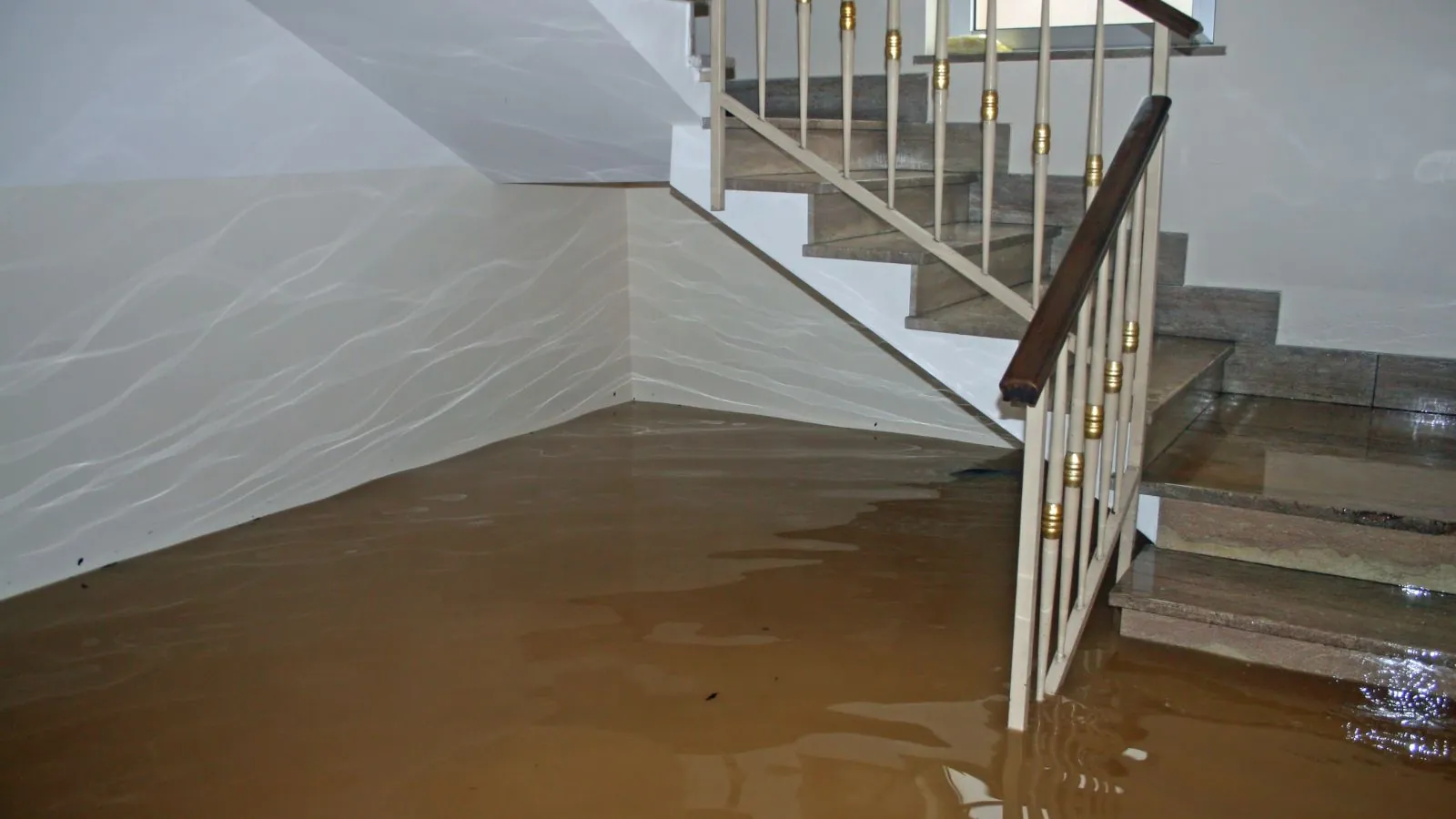
Flood damage restoration is the cleanup of homes and buildings after rising water, from heavy rain, groundwater or a surge from the water, enters from outside. Call the 24/7 line as soon as it is safe to do so. While you wait for the crew, keep kids and pets out of the water and head upstairs if the level is still climbing.
Floodwater is not like water from a broken pipe. It picks up soil, fuel, fertilizer and sewage as it travels, so it is treated as contaminated until proven otherwise. That changes the protective gear, the cleaning method and which materials are thrown out.
Floodwater and electricity
Do not wade through floodwater if power is on in the building. Water can carry current from submerged outlets, cords and appliances. The main breaker is worth tripping only when you can get to a dry panel without wading. A damp panel, a gas odor or visible sparking means walking out and phoning the utility or 911 before anyone else. Assume flood water is contaminated and avoid skin contact.
Why Port Washington floods
The hamlet occupies the Cow Neck Peninsula, so tidal water lies on both its west and east edges. Water borders two sides, so low ground near either shoreline can take on water from rain, tide and storm surge. Your lot's exposure is easy to look up on the FEMA flood map.
A single early-September 2021 downpour put local roads under water and left motorists stranded in stalled cars. Along the Sound, the October 2012 Sandy surge left shoreline property under several feet of water. Manorhaven's 2022 roadwork on Manorhaven Boulevard fixed drainage defects behind earlier storm flooding, which shows how a street can shed water onto nearby basements. These are reasons to know your flood risk, not to assume it.
Water still spreading? The 24/7 emergency line is open right now.
☎ Call (516) 845-9582Floodwater in the house right now
Move through these in order, and stop at any step that is unsafe.
Get to safety
Move to a dry upper floor if water is rising. Do not walk through moving water.
Cut power if you can do so safely
Yes, but only from a dry spot at a dry panel. Otherwise leave it and call the utility.
Document first
Shoot photos and a walk-through video of the tide mark on the walls and every soaked belonging before you carry anything out.
Stay out until it is assessed
Contaminated water can sit in basements and crawl spaces. Wait for a crew with protective gear.
Call the 24/7 line
Tell the dispatcher the source and the depth so the right pumps go on the truck.
What Category 2 and Category 3 mean
Water is sorted by how contaminated it is. The standard that sets these terms is ANSI/IICRC S500.
Category 1
Clean water from a supply line or tank. Rarely applies to a true flood.
Category 2
Gray water with some contamination, like washing machine overflow or a dishwasher discharge. It can cause illness if consumed or contacted.
Category 3
Grossly contaminated, including surface floodwater, sewage and rising groundwater that carries soil and waste.
Why it changes with time
Category 1 water left standing can degrade to Category 2 or 3 as it sits on dirty surfaces.
What can be saved and what cannot
The category and the time in water decide each item.
| Material | Category 2 | Category 3 |
|---|---|---|
| Drywall and insulation | Usually removed if wet | Removed and discarded |
| Carpet and pad | Pad removed, carpet cleaned in some cases | Carpet and pad removed |
| Solid wood and tile | Cleaned and dried | Cleaned, disinfected and checked |
| Upholstery and mattresses | Often discarded | Discarded |
| Concrete and framing | Cleaned and dried | Cleaned, sanitized and dried |
Pumping, removal and drying
The crew pumps out standing water, then removes contaminated materials that cannot be cleaned, as covered on the extraction page. Surfaces that stay get cleaned and treated, and meter readings decide how many days the drying gear stays running, as the structural drying page details. HEPA air scrubbers and containment are used when the work stirs up dust.
A flooded basement has its own steps, which are on the basement page. If the flood came with wind and rain from a storm, the storm damage page covers roof and window breaches.
Sewage-related flooding
Water rising out of a floor drain or toilet is a sewage job and gets handled on different terms. That work is described on its own page, and this page does not cover it.
Flood insurance and FEMA
State regulators at DFS point out that flood sits outside the usual homeowners or renters policy. Protection, if any, comes from a back-up endorsement or a standalone NFIP or private flood policy. Ask your insurer which applies to you.
List the losses room by room with receipts, and keep what you paid for emergency work. Hang onto ruined items until the claim settles, and hold off on lasting repairs until an adjuster has looked. For FEMA aid, contact FEMA directly.
What affects the cost of flood cleanup
Flood jobs are larger than most water losses for a few predictable reasons.
- Water category: Category 2 and 3 need protective gear, disposal and disinfecting.
- Affected area: floors, rooms and levels all add to the work.
- Materials: porous items like drywall, pad and insulation are removed, and the amount depends on the water line.
- Drying days and equipment: more machines run longer after a flood.
- Rebuild scope: replaced drywall, flooring, trim and paint. The crew lays out scope and price first, then starts work, so call the 24/7 line.
Mold after a flood
Mold needs moisture, and a flooded house that stays damp gives it plenty. Drying fast and removing porous materials that stayed wet lowers the risk, but nobody can promise mold will not return. If growth shows up, the mold remediation page covers how New York licenses that work and why assessment and cleanup go to separate people.
Questions about health effects belong with a physician. The published references here are S500 for water and S520 for mold, so ask any bidder whether its crews follow them.
Flood calls near the harbor
Floods do not follow office hours. Night calls get the same intake questions as daytime ones. Neighbors across the harbor in Roslyn, where Hempstead Harbor is at sea level, call for similar reasons.
Rebuild permits come from the office with jurisdiction over your street, which may be the Town or a village. Tidal flooding along Shore Road is described on the Baxter Estates page.
Frequently asked questions
Do you handle flood damage emergencies at night or on weekends in Port Washington?
Yes. Dispatch picks up through the night and over weekends. Stay out of rising water and call as soon as it is safe.
Does homeowners insurance cover flood damage?
A typical policy does not. Coverage comes from a flood policy or sometimes a back-up endorsement. Ask your insurer.
What is the difference between Category 2 and Category 3 water?
Category 2 is gray water with some contamination. Category 3 is grossly contaminated, such as surface floodwater or sewage.
Can carpet be saved after a flood?
Rarely after Category 3 water. Category 2 may allow cleaning in some cases, but the pad usually goes.
How do I check my flood risk?
Pull up the FEMA map for your address, and ask your insurer what flood coverage you actually carry.
Do you also handle sewage backups?
Yes, on a separate service page, because the safety steps and cleanup differ.
How do I get FEMA help?
Contact FEMA directly. A restoration company cannot apply on your behalf.
Ready to talk it through? Call the 24/7 line.
☎ Call (516) 845-9582