
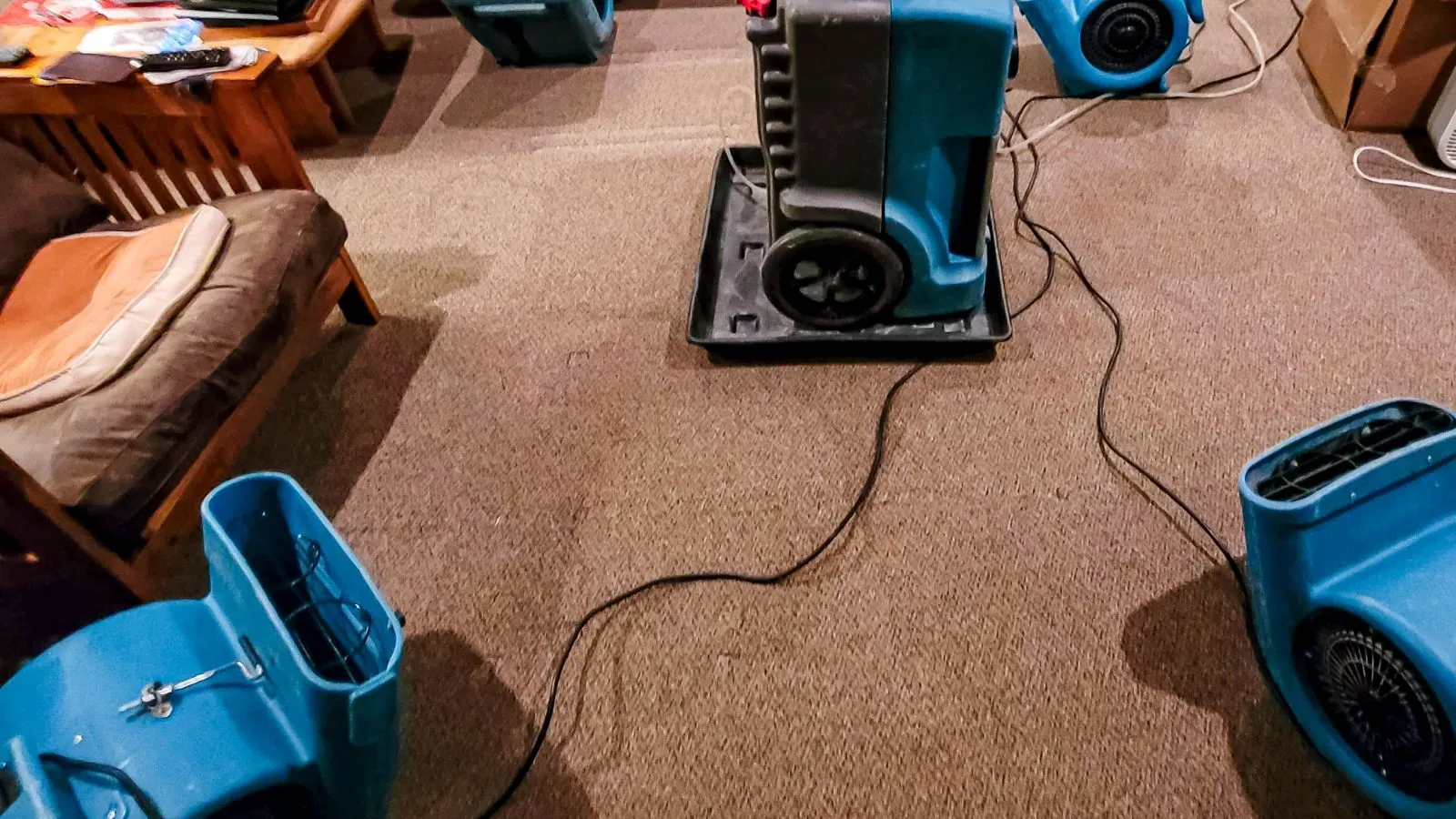
Structural drying is the controlled removal of moisture from building materials after water has been extracted. It uses air movers to push air across wet surfaces and LGR dehumidifiers to pull moisture out of that air, while meters track progress. Done properly, it takes the framing, subfloor and walls back to a dry standard instead of leaving them to dry on their own.
The process follows ANSI/IICRC S500, the published industry standard for water damage restoration. Whether a company's crews follow S500 is a fair thing to ask up front. This page walks through how a drying job runs, what the equipment does and why we do not rent it out.
Walls feel damp, smell musty, floor is cupping
Water damage does not always announce itself. Days after a leak, these signs suggest materials are still wet:
- Walls feel cool or slightly damp to the hand days after a leak.
- A musty smell lingers even though everything looks dry.
- Hardwood edges rise or the floor cups across boards.
- Paint bubbles or wallpaper seams lift.
- Baseboards separate from the wall or swell at the bottom.
- Windows fog or humidity stays high in one part of the house.
Step one is the map
Before any machine is placed, we find where the water went. Moisture meters read pins or surfaces in drywall, wood and concrete. A thermal imaging camera shows temperature differences that suggest wet areas behind finished walls, and it guides where the meters go next.
The map lists every wet material and its reading, and a dry reference reading is taken from an unaffected wall. That baseline becomes the drying goal. Without it, nobody can say when a job is finished.
Questions about your situation? Call the 24/7 line and describe what you see.
☎ Call (516) 845-9582Setting equipment and keeping daily logs
Remove standing water
Extraction comes first because air movers cannot dry a puddle. See water extraction for that stage.
Place air movers
They are angled along walls and across floors to push air over wet surfaces. Placement follows the room's size and the amount of wet material.
Add LGR dehumidifiers
Low grain refrigerant units pull moisture out of the air so it can absorb more from the structure.
Close the space
Doors and windows stay shut so the system dries the building and not the outdoors.
Check and adjust daily
We take readings, move equipment, and record temperature and humidity. If a material stalls, the plan changes.
Confirm the goal
Equipment comes out only when readings match the drying goal.
Water mitigation in practice
Water mitigation is the immediate work that limits damage: stopping the source, removing standing water, protecting contents and starting to dry. Drying is the longest part of it. The overview on our home page covers the full sequence from the first call.
In practice that means a moisture survey on day one, removal of anything that cannot dry, and equipment sized to the wet area. Sealing the work zone from the rest of the house matters more than people expect, because moist air drifting into dry rooms spreads the problem.
Mitigation and rebuilding are separate. Mitigation keeps the loss from growing. Rebuilding replaces what could not be saved. A job that skips proper drying often turns into a rebuild that would have been avoidable.
Why we do not rent air movers
People ask whether they can rent air movers and dehumidifiers and handle it themselves. We do not offer rentals. Drying is not plug-in-and-wait. Without moisture readings, wrong placement can push water into wall cavities and leave the framing wet. Professional drying needs monitoring, adjustment and a defined end point, so we provide the equipment only as part of a monitored job.
Which materials dry well and which do not
| Material | Drying outlook | Watch for |
|---|---|---|
| Framing lumber | Usually dries well | Slow in thick sill plates |
| Drywall | Often dries if clean and intact | Soft or stained boards may be replaced |
| Hardwood floors | Possible with early action | Cupping and gaps, see hardwood floor repair |
| Carpet pad | Rarely worth drying | Usually discarded |
| Concrete | Dries slowly | Holds moisture beneath finishes |
Cost factors for structural drying
Before drying begins, the scope and price are spelled out. These items drive the total:
Water category
Category 1, 2 or 3 changes what can stay.
Area and volume
Square footage and ceiling height decide how much equipment is needed.
Materials
Dense or layered assemblies take longer to dry.
Drying days
We run equipment until the goal is met, so days depend on conditions.
Rebuild scope
Whatever is removed has to be replaced afterward.
Insurance and drying records
Many insurers want proof that drying was done, and the daily log and readings serve that purpose. Abrupt losses are often covered, long-running leaks often are not, and floodwater usually needs its own coverage. Ask your insurer what it requires, and photograph the damage before cleaning.
Wet walls can lead to repairs such as wall and drywall repair once drying is complete.
Drying homes beyond Port Washington
The process does not change between towns, but houses do. A large older home holds moisture differently than a small newer one, and larger homes often need zoned drying. Larger homes get special attention on the Old Westbury page, where bigger floor plans are the norm.
Port Washington itself has mixed housing, so a plan for one street may not suit the next. Call the 24/7 line and describe what got wet. We will tell you what the drying plan would involve.
Frequently asked questions
How long does structural drying take?
That varies with the materials, the hours or days they stayed wet and the conditions inside the home. We do not promise a duration. Daily readings show when the goal is reached.
What does an LGR dehumidifier do?
It pulls moisture from the air at a lower humidity level than a household unit can, so the air keeps absorbing water from wet materials.
Why are air movers placed along walls?
Moving air across wet surfaces speeds evaporation. Placement is based on the moisture map.
Can I rent your drying equipment?
No. We do not offer rentals because professional drying needs monitoring, adjustment and a defined end point.
How do you know when drying is done?
Readings in each wet material reach the dry goal set from an unaffected reference. The logs record each day.
Do you dry in homes where mold may be present?
We dry the structure. If growth is visible, a licensed assessor defines scope and a licensed remediator does the removal. Our mold remediation page explains the split.
Ready to talk it through? Call the 24/7 line.
☎ Call (516) 845-9582