
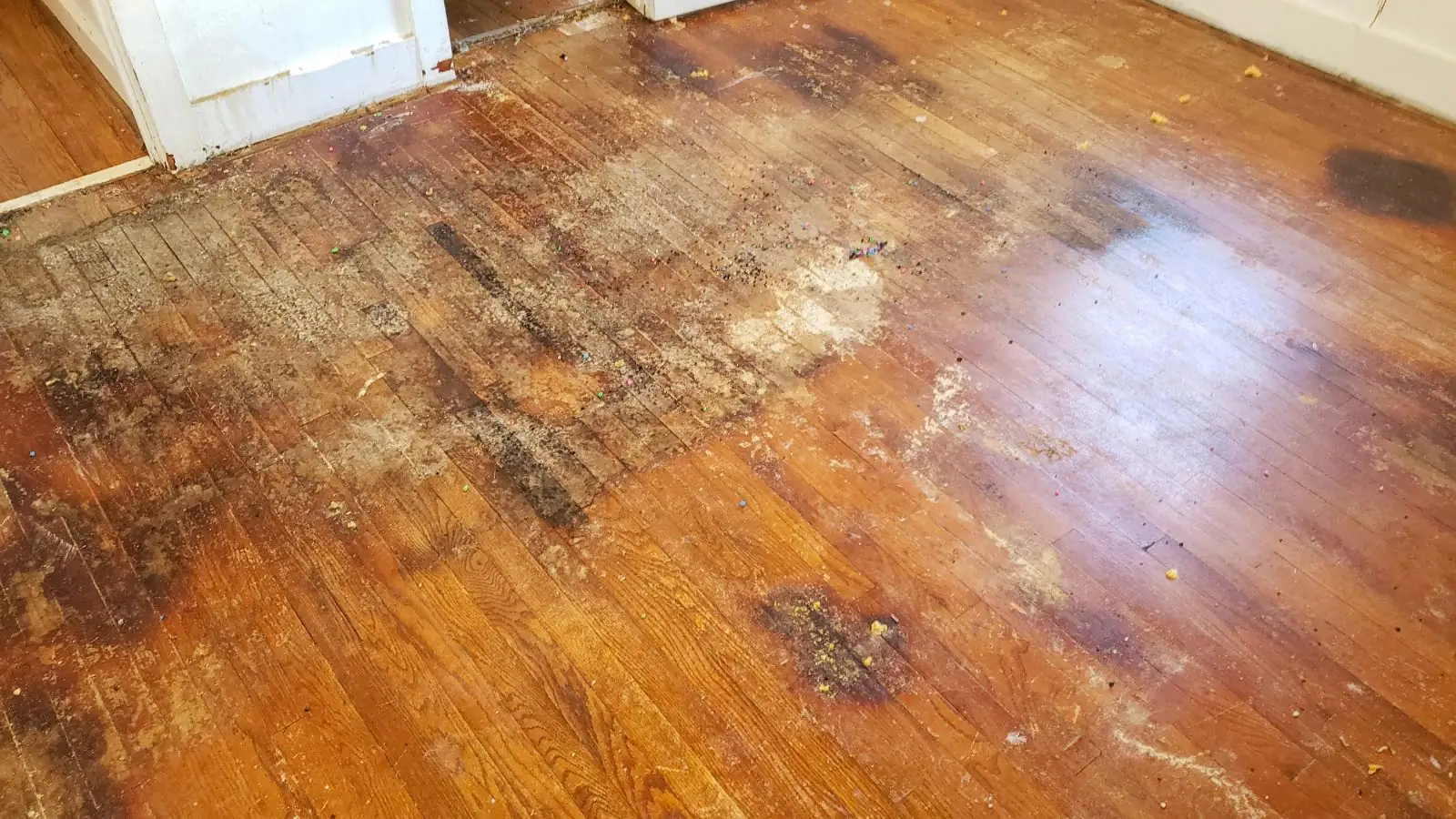
Wood is a natural sponge. When a hardwood floor in Port Washington gets wet from a pipe, an appliance or a storm, the boards pull water in through the seams and the underside, then swell against each other. Hardwood floor water damage repair is the process of drying that moisture out, judging what the boards will do, and then refinishing or replacing what did not recover.
The honest answer to "can my floor be saved" is often "maybe, and we will know in a few days." Boards can look fine on day one and start to warp as they dry, or look terrible and flatten out again. This page explains what is happening in the wood, what drying equipment is used, and where replacement becomes the better choice.
Cupping, crowning and what they tell you
Cupping, crowning or gaps in the boards hint at the water's source and how long it sat.
Cupping
The board edges rise higher than the center. It usually means moisture came from below or the underside is wetter than the face.
Crowning
The center of the board rises and the edges sit lower. It can appear when a cupped floor is sanded before it is fully dry.
Buckling
Boards lift off the subfloor in a ridge. It points to heavy or prolonged wetting and often means replacement.
Gapping
Spaces open between boards as they dry and shrink. This can show up weeks after the leak.
Staining
Dark marks or gray patches show where water or mold has been in contact with the wood or finish.
A cupping scenario we are often asked about
A typical call goes like this. A slow dishwasher or sink leak has been running for weeks, and the owner notices the kitchen boards curling at the edges. The floor feels solid, but a meter shows the boards and the subfloor are far wetter than the dry flooring in the next room.
In that case the cause is stopped first, then the floor is dried before anything is sanded. If the boards flatten as they dry, a screen and recoat or a light sanding may be enough. If they stay cupped after drying, they are removed and replaced.
Questions about your situation? Call the 24/7 line and describe what you see.
☎ Call (516) 845-9582How a wet floor is dried
The method depends on how wet the floor is and what sits underneath.
Find the wet area
Pin and pinless meters, plus a thermal camera, follow moisture beneath the finish and down into the subfloor.
Remove standing water
Extraction units pull water off the surface before drying equipment starts.
Set up drying
Air movers, LGR dehumidifiers and, on a solid floor, drying mats or panels pull moisture up through the boards.
Open the edges if needed
Baseboards or a few boards may come off so air reaches the cavity underneath.
Read the wood again
Moisture content is compared with unaffected flooring in the same house. The target is a match to dry boards, not a single universal number.
Drying in place versus pulling boards
Neither route is always right. Here is how the trade-offs usually look.
| Approach | What it offers | What to weigh |
|---|---|---|
| Dry in place with mats | Keeps most of the original floor | Takes days and may still leave cupping |
| Pull a section of boards | Gets air under the floor fast | Needs matching and blending later |
| Remove the whole floor | Clean slate after heavy damage | Highest rebuild scope |
| Wait and watch | Lets boards settle before deciding | Risks mold if drying is incomplete |
Sanding, finish and replacement
Sanding comes last, only after the readings match dry flooring. Sanding a floor that is still wet can lock in cupping or crowning and ruin the finish a second time. After sanding, the stain and sealer are applied to blend with the rest of the room.
Replacement boards are cut in with the same species and width where they can be found. A new patch rarely matches an old, sun-aged floor right away, so some owners choose to refinish the whole room for an even look.
Laminate and engineered flooring
Laminate has a fiberboard core that swells at the edges and rarely returns. Engineered wood has a plywood core that handles water better, but the top veneer can still lift. Both are usually floated or glued over a pad or subfloor, so check underneath before assuming the surface is the only problem.
What shapes the price
There is no honest flat number for a floor. These are the real drivers:
- The water category, since gray or black water usually means removal.
- The size of the wet area and how far it ran under walls and cabinets.
- The flooring type, whether solid, engineered or laminate.
- Drying time and the equipment count.
- The rebuild scope, from a screen and recoat to full replacement and refinishing.
- Phone the 24/7 line and ask for the scope and price in advance.
Insurance and local notes
A dishwasher hose that lets go overnight may be covered, while years of seepage often is not. Before cleanup, photograph the floor from several angles, then ask your insurer about your policy. Flood water is generally a separate-policy matter.
Muggy summer weather near the water can slow wood drying in a house with little airflow, so the schedule may stretch. The same crews who handle water extraction also set up the drying, and wall and drywall repair often follows when water wicked up the baseboards. Homes in Old Westbury with large wood floor runs get the same process.
Frequently asked questions
Will my hardwood floor cup after a leak?
It can. Cupping often shows up within days as the boards absorb water, and some flatten again once the floor dries.
How do you know when the floor is dry enough to sand?
Readings are compared with unaffected flooring in the same home. When the wet boards match the dry ones, sanding can begin.
Can drying mats save a wet hardwood floor?
They can help on a floor that has not buckled, by drawing moisture out through the boards. Heavily warped boards may still need replacing.
Is laminate repairable after water damage?
Rarely. The fiberboard core swells at the seams, so wet laminate is usually replaced.
Do I need to refinish the whole room?
Not always, but new boards seldom match old ones exactly. Many owners refinish the room so the finish looks even.
Should I worry about mold under the floor?
Mold needs moisture, so drying quickly matters. If you suspect growth under the boards, the mold remediation page covers assessment.
Ready to talk it through? Call the 24/7 line.
☎ Call (516) 845-9582