
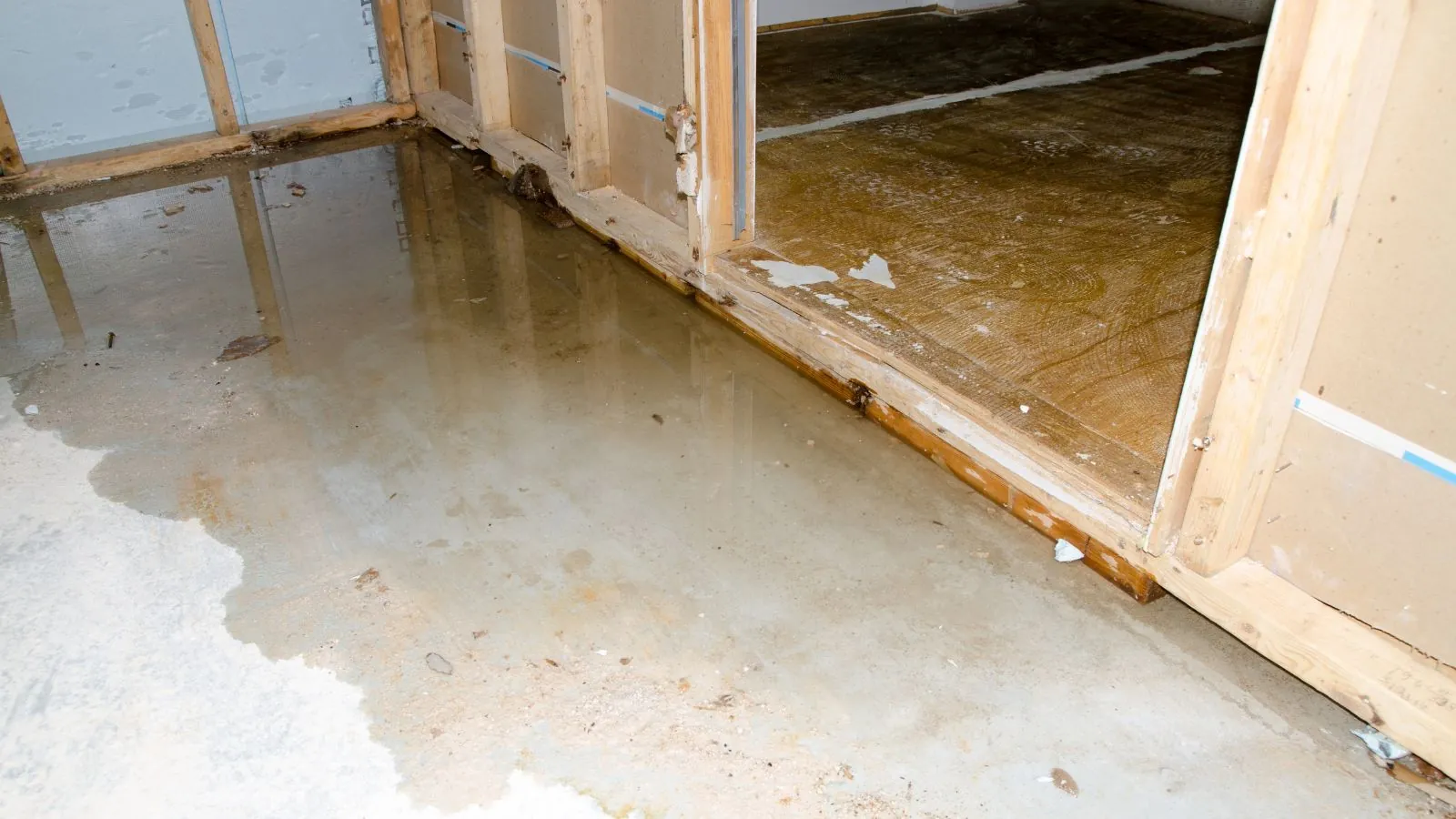
If there is water in your basement right now, call our 24/7 dispatch line, then stay out of the room if the water is touching outlets, the panel or anything plugged in. While you wait, keep everyone upstairs, move valuables and paper from low shelves only if the floor is dry and safe, and photograph the water line from the stairs. Do not run a household vacuum or step into standing water.
Basement water damage cleanup means pumping out a below-grade room, then drying and cleaning its walls, slab, stored belongings and any finished area. It is not waterproofing and it is not foundation repair. Those jobs belong to a waterproofing or foundation contractor, and they matter once the room is dry so the water does not come back.
Standing water in the basement right now
Here is the order that protects people first and property second.
Stay out if power is at risk
Water and electricity are a bad mix. If water is near outlets, the panel or appliances, do not enter.
Stop any source you can
If a supply pipe is leaking, shut the main water valve. If it is rain or groundwater, there is nothing to shut.
Call the line
Start with the address, the depth and whether the lights still work. This decides the equipment sent.
Document from a safe spot
Take photos and video of the water line and damaged items for your insurer before anything is moved.
Wait for extraction
Pumps and extraction units remove the water, then drying equipment goes in. Do not start before it is safe.
Safety around the electrical panel
Never wade into a wet basement to reach the panel or a switch. Shutting off the breaker makes sense only from a dry panel with dry footing. Water at the panel or outlets, or a burning smell, means you go upstairs and outside and call the utility or 911 ahead of us. Basements with standing water can also hide a gas appliance or a flooded furnace, which are separate hazards.
Water still spreading? The 24/7 emergency line is open right now.
☎ Call (516) 845-9582After hours and weekends
Basements flood when it rains, and rain does not wait for business hours. A basement that floods at 2 a.m. gets the same dispatch line as one that floods at noon. Water that sits overnight soaks into drywall, stored boxes and carpet, so a night call can save a lot of damage.
Late callers get walked through what to leave in place, what to carry up and what to photograph. The crew then plans extraction and drying for the morning if the water is low and safe, or sooner if it is deep.
Why the basement fills
Cause decides both the cleanup and who fixes the source.
Sump pump failure
A pump that quits during a storm lets groundwater rise. A power outage or a stuck float is a common reason.
Wall or floor seepage
Water pushes through cracks or the wall-floor joint after heavy rain. Cleanup does not seal it.
Plumbing failure
A burst line or water heater leak. See burst pipe damage or water heater leak cleanup.
Sewer or drain back-up
Contaminated water coming up the floor drain. See sewage backup cleanup for that case.
Window well overflow
Rain pools in a window well and spills through the glass or frame.
Contents, finished rooms and stairs
A finished basement holds more than drywall. These are the things we see handled in the first visit:
- Cardboard storage boxes should be lifted out of the water and moved to a dry area for sorting.
- Furniture with fabric or particleboard often absorbs water and is hard to save.
- Carpet and pad are removed or lifted depending on the water category, see the carpet page.
- Stairs get wet at the bottom steps, and the carpet or runner there can hide wet wood.
- Bottom of the walls may need drywall cut to open the cavity for drying.
- Photos, papers and electronics should be set aside and not powered on.
Restoration is not waterproofing
We pump, dry and clean. We do not seal foundations, regrade yards, install drainage systems or repair walls that leak. If the same room floods again after rain, the cause needs a waterproofing or foundation contractor.
Drying a basement and leaving the source unfixed is a short-term answer. Call for the cleanup first so the structure does not sit wet, then plan the permanent fix once the room is dry and the cause can be seen.
Cost factors for a wet basement
The price is set by the room and the water, not by a flat rate.
- The water category, which ranges from clean groundwater to contaminated back-up.
- The depth of water and the area affected.
- Whether the room is bare concrete or finished with walls, flooring and contents.
- How many days LGR dehumidifiers and air movers must run.
- The rebuild scope, including drywall, insulation and trim.
- Dispatch can describe the scope and price before the crew begins.
Insurance and flood coverage
Under DFS guidance, a standard homeowners policy leaves flood out. An added back-up and sewage endorsement may respond to a failed sump pump or a sewer back-up, and a separate flood policy covers rising water. Read the policy language and put the question to your insurer.
Photograph the damage before cleaning, keep damaged property until settlement and save receipts for emergency work. Wait for the insurer's inspection before building anything back.
Local note for Port Washington
Water borders this peninsula on two sides, which keeps the groundwater question alive for lower levels. One early-September 2021 storm flooded streets and stranded drivers, proof that drainage can be swamped fast enough to push water toward foundations. In Manorhaven, a 2022 project on Manorhaven Boulevard repaired old drainage defects that had flooded the road in heavy rain.
The FEMA flood map will show which zone your address falls in. For storm and rain cases, see storm water damage cleanup. Homes in Roslyn near Hempstead Harbor can use the same dispatch line.
Frequently asked questions
Do you handle basement water damage emergencies at night or on weekends in Port Washington?
Yes. The line stays open on nights and weekends. Call, and we will talk through safety steps while a crew is arranged.
Is it safe to go into a flooded basement?
Not if water is near outlets, the panel or appliances. With any electrical doubt, stay upstairs and phone the utility or 911 first.
Will you fix what caused the water?
Restoration covers extraction, drying and cleaning. A waterproofing or foundation contractor fixes seepage or drainage causes, and a plumber fixes pipes.
Does homeowners insurance cover a flooded basement?
Flood is usually excluded, but a water back-up endorsement may help with sump or sewer back-up. Read the policy language and put the question to your insurer.
What happens to stored boxes and contents?
Items are lifted out of the water, sorted into dry-able and discard piles, and photographed first for your records.
How long does it take to dry a basement?
It depends on the water, the materials and the equipment. Drying is confirmed with moisture readings, not a calendar.
Ready to talk it through? Call the 24/7 line.
☎ Call (516) 845-9582