
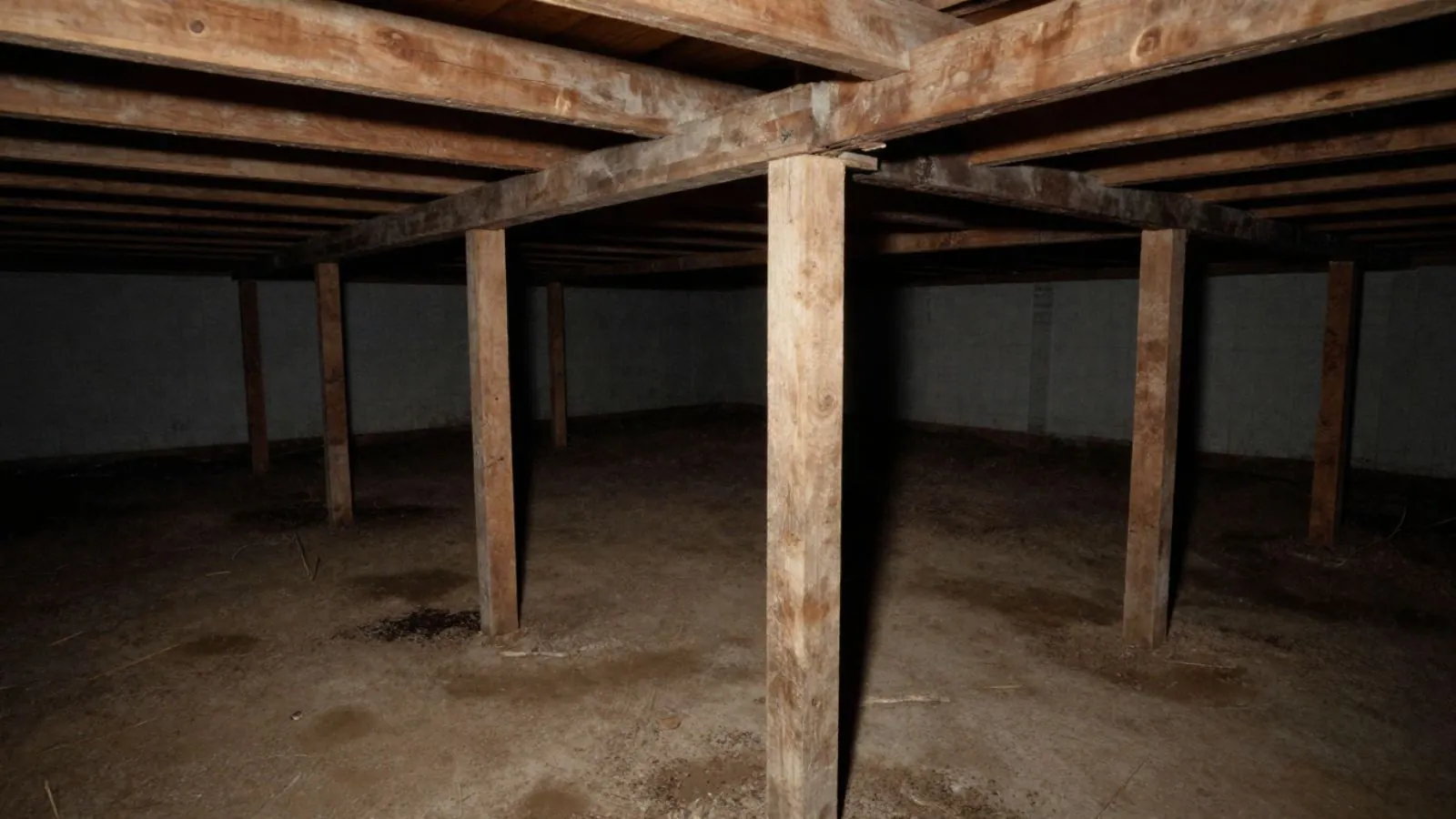
Crawl space water damage is water that collects in the shallow void between the ground and the first floor, soaking insulation, the vapor barrier, subfloor and the joists that hold the house up. The space is dark and rarely visited, so the first sign is often an odor rising through the floor or a floor that feels spongy underfoot.
Housing varies across Port Washington, and plenty of houses stand over basements or slabs, so a crawl space is not a feature of every home. When a home does have a crawl space and it gets wet, the cleanup is a specific job with its own tools, and this page explains it plainly.
Why water collects under a house here
Under the Cow Neck Peninsula lies the Harbor Hill Moraine, and bay water on one side and harbor water on the other keep the ground damp. After a long rain, water can move through soil toward the lowest point, and a crawl space is often that point. Ask your building department whether your lot has a known drainage issue.
Plumbing is the other common cause. A supply line, drain or water heater overflow above can drip into the void for a long time. Heavy rain, a failed sump pump if one exists, a downspout dumping beside the foundation and a vent opening at ground level can all feed it.
Signs there is water below the floor
- A musty or earthy smell that is strongest near floor vents or closets.
- Floors that bounce, cup, buckle or feel soft near exterior walls.
- Visible dampness or beads of moisture on ducts and pipes in the space.
- Insulation hanging down from the subfloor, torn or heavy with water.
- A vapor barrier that is pooled with water, pushed aside or missing.
- Gaps between baseboards and floors, or doors that stick after rain.
- Cold, damp air coming up through registers.
Questions about your situation? Call the 24/7 line and describe what you see.
☎ Call (516) 845-9582Someone calls about a crawl space with water in it
Typically they describe a few inches of water or a puddle in one corner. The first thing we ask is where it is coming from. If it is rain, it may stop when the rain does. If it is a pipe, the water will keep coming until the plumber isolates it.
We will not tell you to crawl in yourself if there is electrical wiring near the water. Wiring and ductwork often run low in a crawl space, so go to the panel only when it is dry, and call 911 or the utility about any gas or electrical danger. A tight, wet space with wiring is not a place for a homeowner.
How the space is assessed and dried
Work in a crawl space is slow and low, but the sequence is familiar.
Find the source
We trace the water to a line, an opening or the soil before drying starts, because drying a space that is still feeding is pointless.
Pump out standing water
Extraction units and small pumps lower the water so crews can reach the materials.
Read the wood and soil
Moisture meters check joists, subfloor and sill plates, and a thermal imaging camera helps reveal damp insulation.
Remove wet insulation
Soaked batts hold water against the subfloor and are usually discarded. Bagged out material leaves through the access.
Dry with equipment
Air movers, LGR dehumidifiers and sometimes HEPA air scrubbers run while readings are logged, following structural drying practice.
What restoration covers, and what it does not
Being clear here prevents surprises.
| We do | We do not | Who does it |
|---|---|---|
| Extract water and dry joists and subfloor | Encapsulate the crawl space | A crawl space or waterproofing contractor |
| Remove wet insulation and damaged vapor barrier | Install new drainage or sump systems | A drainage or plumbing contractor |
| Document moisture readings | Fix the leaking pipe | A licensed plumber |
| Flag visible growth for a licensed assessor | Perform mold testing and remediation in the same job | NYS licensed assessor and remediator |
Repair options with honest trade-offs
Dry and replace insulation
The simplest route for a small, recent wet. It works only if the source is fixed first.
Remove and replace the vapor barrier
Lets the ground moisture be controlled again, but it is a separate job from drying.
Replace damaged subfloor sections
Needed when wood is soft or delaminated. It opens the floor above, so finish work follows.
Sister or replace joists
A carpenter's decision for rot, and not something drying alone can reverse.
Wait and monitor
Sensible after a one-time event with dry readings, though repeat wetting means the cause is still open.
Cost factors for crawl space cleanup
Price depends on water category, since groundwater and runoff are usually Category 2 or worse, while a clean supply line leak starts as Category 1. It also depends on square footage, how tight the access is, how much insulation and wood is wet, and how many days of equipment are needed. Rebuild scope for subfloor and insulation is separate.
You see the scope and the price before a crew crawls in. Ring the 24/7 line and describe how you get into the space and how deep the water looks.
Insurance and a flooded crawl space
Ordinary homeowners coverage leaves out flood, and New York's DFS notes that protection may come from a separate NFIP policy. A sudden pipe failure above the crawl space may be treated differently, and gradual seepage often is not covered. Water that came in from outside is a different case, covered under flood damage restoration, and your address is worth checking on the FEMA flood map.
Photograph the space before cleaning, keep every receipt, and check with your insurer before rebuilding anything permanent. Related below-grade guidance is on our page about basement water damage.
Homes near Greenvale and the rest of the peninsula
Construction varies from street to street, so we look at your actual space instead of assuming. If your home is in Greenvale, our page on Greenvale water damage restoration covers that area, and the crawl space process is the same.
Dampness that lingers can lead to a mold question. Fix the water first and then see mold remediation if growth is visible.
Frequently asked questions
Is mold likely after a wet crawl space?
Mold needs moisture, so a space that stays wet for a long time can support growth. Dry it fast and have visible growth looked at by a licensed assessor. We make no health claims.
Do you encapsulate crawl spaces?
No. Encapsulation and waterproofing are specialty trades. We remove water and wet materials and dry the structure.
Can I just run a dehumidifier myself?
A household unit cannot dry joists and subfloor on its own. Professional drying uses monitored equipment and moisture readings.
How long will drying take?
The answer turns on what the materials are, how long they stayed wet and what the air in the space is like. We take readings and release equipment when they are dry.
Do all Port Washington homes have crawl spaces?
No. Housing is mixed, with many basements and slabs. This page applies when a home does have one.
What should I do before you arrive?
Stop any water source you can reach safely, stay out of the space if wiring is wet, and photograph what you see from the access point.
Ready to talk it through? Call the 24/7 line.
☎ Call (516) 845-9582