
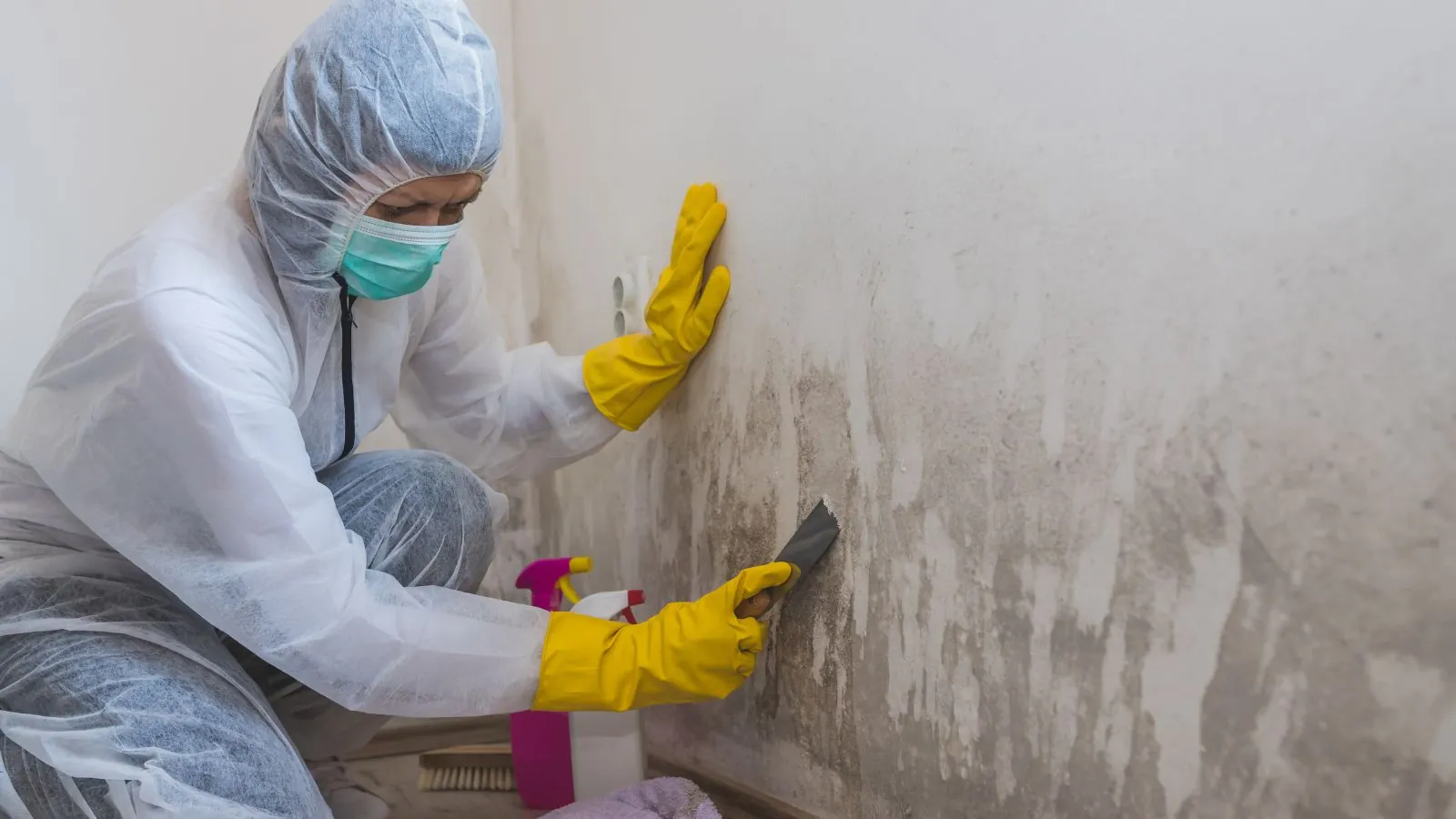
Mold remediation in Port Washington, NY is the controlled removal of mold growth and the materials it has damaged, followed by cleaning and drying so the area can be cleared and rebuilt. It is a secondary service for us. Most calls begin as a leak or a wet wall, and the mold work follows when water was left too long.
The job is only as good as the repair behind it. Mold needs moisture to grow, so a cleaned wall that keeps getting wet will grow it back, and no company can honestly promise otherwise.
A musty smell, dark spots in a closet corner, a stained bathroom ceiling
Most people do not start by searching for mold remediation. They notice a smell in a bedroom closet that gets worse when the door is shut, a patch of dark spots where an exterior wall meets the ceiling, or a bathroom ceiling that has gone speckled above the shower. Sometimes it is a bubbling paint blister or a baseboard that has turned soft.
Any of these can mean moisture is getting in somewhere it should not. When the spots are on drywall, plaster or wood, and the cause was a leak, the work you need goes by a trade name: mold remediation. This page explains what that involves, what has to happen before it and who is allowed to do which part.
Find and fix the water source first
Cleaning mold off a surface does nothing if the surface stays wet. The source has to be found and repaired by the right trade before remediation starts. Common culprits we see traced include:
- A toilet supply line or wax ring leaking slowly into the subfloor.
- A sink drain or faucet connection dripping inside a vanity.
- An AC condensate line that clogged or disconnected and is feeding a wall or ceiling, see AC leak damage.
- A roof or flashing leak wetting attic framing and the ceiling below.
- An exterior wall that takes in water behind a closet or built-in.
- A past loss that was never dried, such as a burst pipe or an old appliance leak.
Questions about your situation? Call the 24/7 line and describe what you see.
☎ Call (516) 845-9582Testing and inspection under New York State rules
Under New York law, mold assessors and mold remediators each need their own license from the state Department of Labor. Advertising or presenting yourself as either one without that license is against the law. A homeowner working on their own property is the narrow exception. State minimum standards have an independent assessment set the scope of the remediation work.
What matters most is separation of roles. One individual may not both assess a property and then remediate it. That protects you from a company that diagnoses a problem it is paid to fix. Home inspectors who assess mold must also be licensed as mold assessors, so ask for the license and read the written protocol before work begins.
We do not do sampling or give diagnoses, and we do not make health judgments. Questions about symptoms go to your physician.
How the remediation process works
Each step below follows the assessor's written protocol and the S520 industry standard, a published guideline, so ask whoever you hire which one they work from.
Set up containment
Plastic sheeting and negative air pressure seal the work zone so spores and dust do not travel to the rest of the house.
Run HEPA air scrubbers
HEPA air scrubbers filter the air inside the containment while the work proceeds and afterward.
Remove porous materials
Affected drywall, insulation, carpet pad and ceiling tile are cut out and bagged. Mold grows into porous materials and cannot be cleaned from them.
Clean what stays
Framing and other solid surfaces are HEPA-vacuumed and wiped or abrasively cleaned according to the protocol.
Dry the area
Air movers and LGR dehumidifiers bring the cavity back to normal, confirmed with moisture meters.
Clearance
The independent assessor inspects, and may test, to confirm the work met the protocol before anything is rebuilt.
The order of operations from first call to rebuild
A well-run mold job has a clear sequence. A plumber or roofer fixes the leak, an independent licensed assessor writes the protocol, a licensed remediation contractor carries it out, the assessor checks the result, and only then does a contractor rebuild. Skipping a step usually costs more later.
If you call us first, we will tell you honestly whether what you describe sounds like a drying problem or a mold problem. A recent leak caught within a day or two may only need drying, as covered on our water extraction page. Growth that has already spread across a wall needs the assessor and the full process above.
Keep photos of the area before anything is opened up, and save the assessor's written protocol and clearance report. Those documents help with insurance, with a later sale and with any warranty a rebuild contractor offers.
What mold remediation costs
Price is not set until the assessor's scope is in hand. These factors move it.
Size of the affected area
A closet corner and a whole finished basement are very different jobs in labor, containment and disposal.
Materials involved
Drywall comes out and goes back in, while plaster, built-ins and flooring can add time.
Water category behind it
If the original water was contaminated, cleaning and removal steps expand.
Drying and equipment days
Scrubbers, dehumidifiers and monitoring visits add up the longer the area takes to dry.
Rebuild scope
Replacing drywall, paint, trim and flooring after clearance is usually quoted separately from the remediation.
Insurance and mold, in general terms
Whether mold is covered depends on your policy and on what caused the water. Many policies cover mold that follows a sudden, accidental loss and exclude or limit it when the cause was a slow leak or neglect. Flood damage is usually excluded unless you carry NFIP or private flood coverage. Photograph the growth before cleanup, keep receipts and ask your insurer what they need. We do not give insurance advice.
Local notes for Port Washington homes
Waterfront living means damp air, and in Port Washington the bay and the harbor are never far away. That makes ventilation in bathrooms, closets and basements worth checking, especially after any leak. Rebuild permits come from the Town of North Hempstead in the unincorporated area or from the village hall in an incorporated village.
Families in nearby areas such as Roslyn Heights face the same cause and cure. Fix the moisture, assess independently, then remediate.
Frequently asked questions
What is the difference between mold testing and mold remediation?
Testing and assessment find the growth and define the scope. Remediation removes it. No. State rules keep the two jobs with different licensed people.
Can I just wipe it with bleach?
For a small, surface-level spot on a hard material you can often clean it yourself, but bleach does not dry out the moisture behind it. Anything spread across drywall, wood or insulation, or recurring after cleaning, should be assessed.
Do I need mold clearance for a home sale or a loan?
Some buyers and lenders ask for a clearance letter from the independent assessor. We cannot promise any lender or buyer will accept it, so ask them what documentation they require.
Will mold come back after remediation?
We do not promise it will not return. If the moisture source is fixed and the area is dry, regrowth is much less likely, but a new leak can start the process again.
How long does remediation take?
Small contained jobs may take a day or two, while larger ones run longer because of drying and clearance. The assessor's protocol and the drying readings set the schedule.
Is mold remediation covered by insurance?
That turns on the wording of your policy and where the moisture came from. A one-time burst is more likely to be covered than a slow drip, though only your insurer can confirm it for your policy.
Do you handle the leak that caused the mold?
We do the water cleanup and drying, but not plumbing repair. Call a licensed plumber for the fix, and see structural drying for how we dry the structure afterward.
Ready to talk it through? Call the 24/7 line.
☎ Call (516) 845-9582