
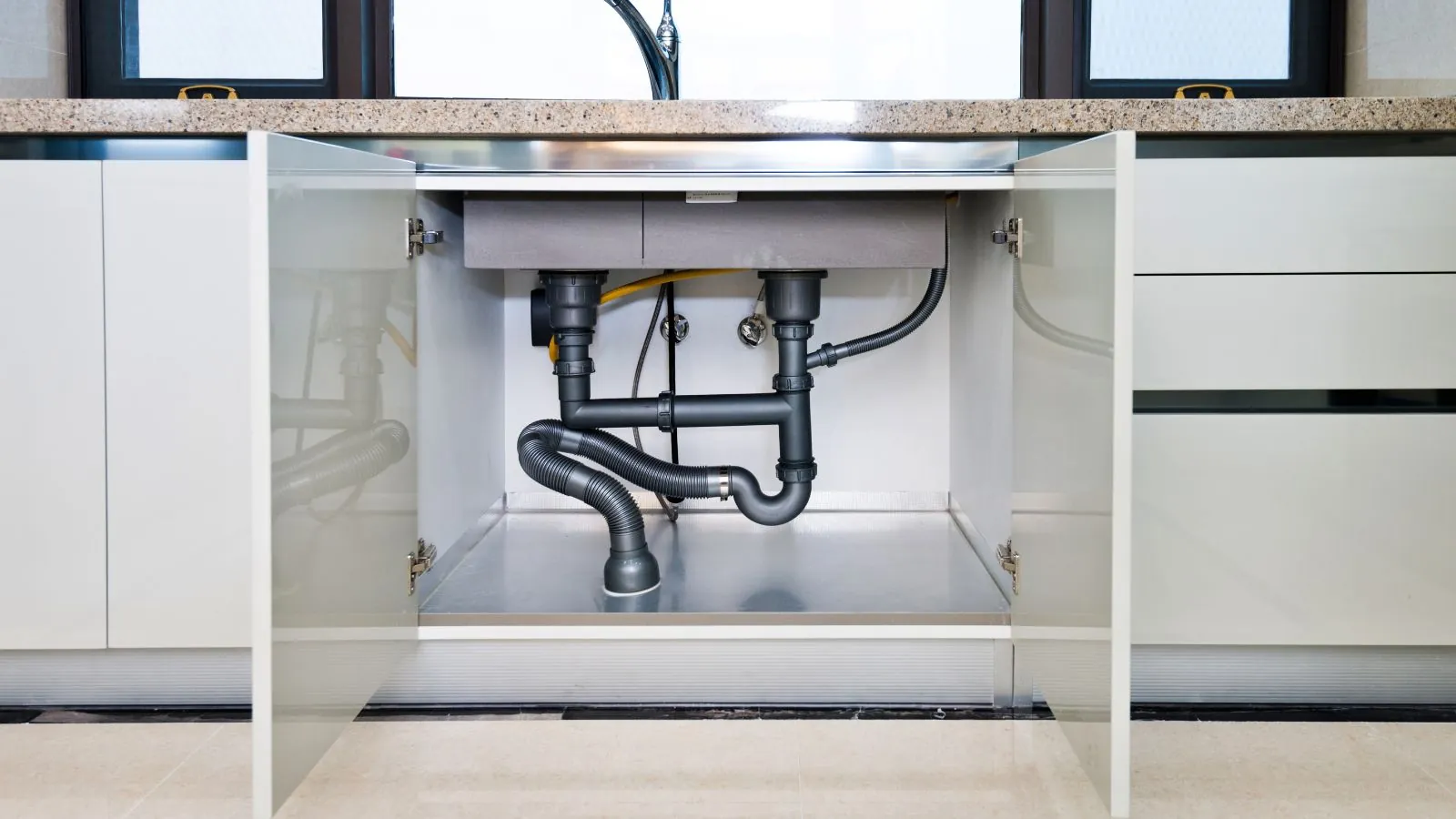
Kitchen water damage in Port Washington usually starts out of sight. A supply line splits under the sink, a pipe in the wall behind the range lets go, and the water runs into the cabinet base, the toe-kick and the subfloor long before anyone sees a puddle. The job is to locate each wet layer, dry what can stay and take out what cannot.
A kitchen is hard to dry because it packs many materials into a small room. Solid wood, plywood, particleboard, laminate and tile each absorb and release water on their own schedule. This page covers cabinets, countertops, toe-kicks and the floor system under them. If a dishwasher, refrigerator line or similar machine caused the leak, the appliance page covers that side of the problem.
A pipe bursts under the sink
The most common call for this room is a failed pipe or fitting inside the sink base. Water pours onto the cabinet floor, finds the gap around the drain and supply openings, and drops to the subfloor. Because the cabinet door stays shut, a leak can run overnight or while the household is at work.
Close the angle stop under the sink or the main, clear the cabinet and take pictures before wiping. Towels help with the surface, but they do nothing for the water that has already moved under the cabinet box. For the pipe failure itself, the burst pipe page explains how breaks are located and repaired.
What a wet kitchen looks like
These signs often show up days after a slow or hidden leak starts.
- The toe-kick board at the base of the cabinets feels soft, swollen or has begun to separate.
- The inside floor of the sink cabinet is stained, bubbled or crumbles when pressed.
- Laminate countertop edges near the sink have lifted or the seam has opened.
- A musty smell comes from the cabinets even when the sink is dry.
- Floor tile or vinyl near the cabinets has loosened, cupped or sounds hollow.
- The water meter keeps moving when every fixture in the house is off.
Questions about your situation? Call the 24/7 line and describe what you see.
☎ Call (516) 845-9582How the damage is found and measured
The sequence matters because a dry-looking surface can sit on a wet core.
Map the moisture
Meters and a thermal camera follow the water behind the toe-kick, under the dishwasher bay and along the cabinet backs.
Classify the water
A clean supply line is category 1. Drain water or anything that sat for days is category 2 or 3, which changes what may stay.
Remove what cannot be saved
Swollen particleboard, soaked insulation and wet toe-kick material come out first so they stop holding water against the framing.
Dry the rest
Air movers and LGR dehumidifiers run on the cabinet interiors and floor, sometimes with drying mats or small injection ports for closed cavities.
Verify with readings
Moisture readings are taken again against unaffected material in the same room until the wet areas match it.
Dry in place or tear out
Honest trade-offs differ by material, and the decision is made with a meter, not by looks alone.
| Material | Often dried in place | Usually removed |
|---|---|---|
| Solid wood cabinet boxes | Yes, if clean water and caught early | Warped or delaminated parts |
| Plywood boxes | Often, with open drying | Swollen edges that do not recover |
| Particleboard or MDF | Rarely, it swells and weakens | Most wet pieces |
| Laminate countertop | Surface only, if the seam is sealed | Lifted or bubbled sections |
| Subfloor under cabinets | Yes, with floor-level drying | Soft or delaminated panels |
Why particleboard is the weak link
Many kitchen cabinets are built from particleboard with a thin laminate skin. Once water gets into the core, the board swells and loses its holding strength, and it rarely shrinks back to a flat, sound shape. Drying can stop further damage, but the swollen piece may still need to be replaced.
Solid wood and good plywood behave better. They can often be dried while the cabinets stay mounted, which saves the cost and disruption of pulling the whole run. The catch is that drying under a fixed cabinet needs openings, so a few small holes or a removed toe-kick are normal.
What drives the cost
No fair figure exists until someone has measured the room. These factors set the scope:
- The water category, since category 2 or 3 water means more removal and cleaning.
- How far the water traveled beyond the sink base into adjacent cabinets and rooms.
- The cabinet and countertop materials, and whether they can be dried or must be replaced.
- The number of drying days and how much equipment the room needs.
- How much rebuild work follows, from a new toe-kick to a full cabinet run.
- Call the 24/7 line to talk through your kitchen, and the scope and price come first.
Insurance and your kitchen
A burst supply line under the sink is the kind of sudden event a homeowners policy often covers. Slow leaks and long-term neglect often are not, so the cause matters. Put the specifics to your insurer.
Photograph the cabinets, floor and any failed part before cleanup, and keep receipts for emergency repairs. State insurance regulators advise waiting for the insurer's inspection before permanent repairs.
Kitchens around Port Washington
North Shore winters bring freezing weather, which can stress supply lines to a kitchen on an exterior wall. A supply line in an exterior wall can freeze and split, then leak behind the cabinets once it thaws. See the frozen pipe page if that sounds like your case.
The Port Washington Water District reports hard water in its 2025 quality report, and mineral scale can stiffen shutoff valves under the sink. Turn yours now and then so it works on the day you need it. Neighbors in Roslyn Heights and nearby towns can call the same 24/7 line, and structural drying is how the floor system gets dry afterward.
Frequently asked questions
Can kitchen cabinets be saved after a leak?
Often yes if the boxes are solid wood or plywood and the water was clean. Particleboard that has swollen usually has to be replaced.
Do you have to remove the countertop?
Not always. Stone and sealed laminate can often stay if water did not get under them, but a lifted seam or a soaked substrate may force removal.
How is the subfloor under the cabinets dried?
Through the toe-kick opening or small ports, using air movers and dehumidifiers, then confirmed with moisture readings.
Is a leak under the sink an emergency?
Shut off the water first. If water is still reaching the floor or the cabinet is soaked, call the 24/7 line the same day.
Will insurance cover the damage?
Sudden and accidental leaks are often covered while slow leaks often are not. Your policy wording settles the question.
What about leaks from a dishwasher or fridge line?
Those are covered on the appliance leak page, including how the source is stopped.
Ready to talk it through? Call the 24/7 line.
☎ Call (516) 845-9582