
Wet carpet is one of the most common results of a leak, and one of the most misjudged. People either rip it all out in a panic or leave it sitting for a week hoping it dries on its own. Carpet water damage restoration in Port Washington starts with a simple question: what kind of water got in, and how long has it been there?
Carpet is a surface layer over a pad, and the pad is usually the part that decides the outcome. Pad soaks up water like a sponge and dries slowly, while the carpet fibers on top can look fine. This page explains the save-or-discard decision, how lifting and drying works, and what to do if you find mold when the carpet comes up.
The water decides first
Water categories, set out in the S500 standard for water damage, drive the choice before anything else.
| Water source | Category | Carpet outcome |
|---|---|---|
| Supply line, clean rain intrusion | Category 1 | Often dried and kept, pad may be replaced |
| Washing machine or dishwasher drain | Category 2 | Case by case, pad usually goes |
| Sewage, river or harbor flooding | Category 3 | Carpet and pad are normally discarded |
| Clean water that sat for days | Rises over time | May be treated as category 2 |
The time window for saving carpet
Many restorers talk about a window of roughly 48 to 72 hours after a clean water loss. After that, odor, bacteria and mold become more likely, and the odds of saving the carpet drop. This is a general rule of thumb, not a promise, because a cool, dry room and a warm, humid one behave very differently.
If you cannot reach us right away, lift furniture off the wet area and put foil or blocks under the legs. Turn on fans if the power is safe, and take photos before anything is moved. Then call the 24/7 line so a meter can show how deep the water went.
Questions about your situation? Call the 24/7 line and describe what you see.
☎ Call (516) 845-9582Lifting, drying and cleaning
Here is how a wet room is usually handled when the carpet is worth keeping.
Extract the water
Extraction units draw the water up through the carpet fibers and out of the pad beneath. This step removes more water than any dryer will.
Check the pad and subfloor
Readings across the room mark where the soaked area stops, including strips under the tack line and into the subfloor.
Lift and prop the carpet
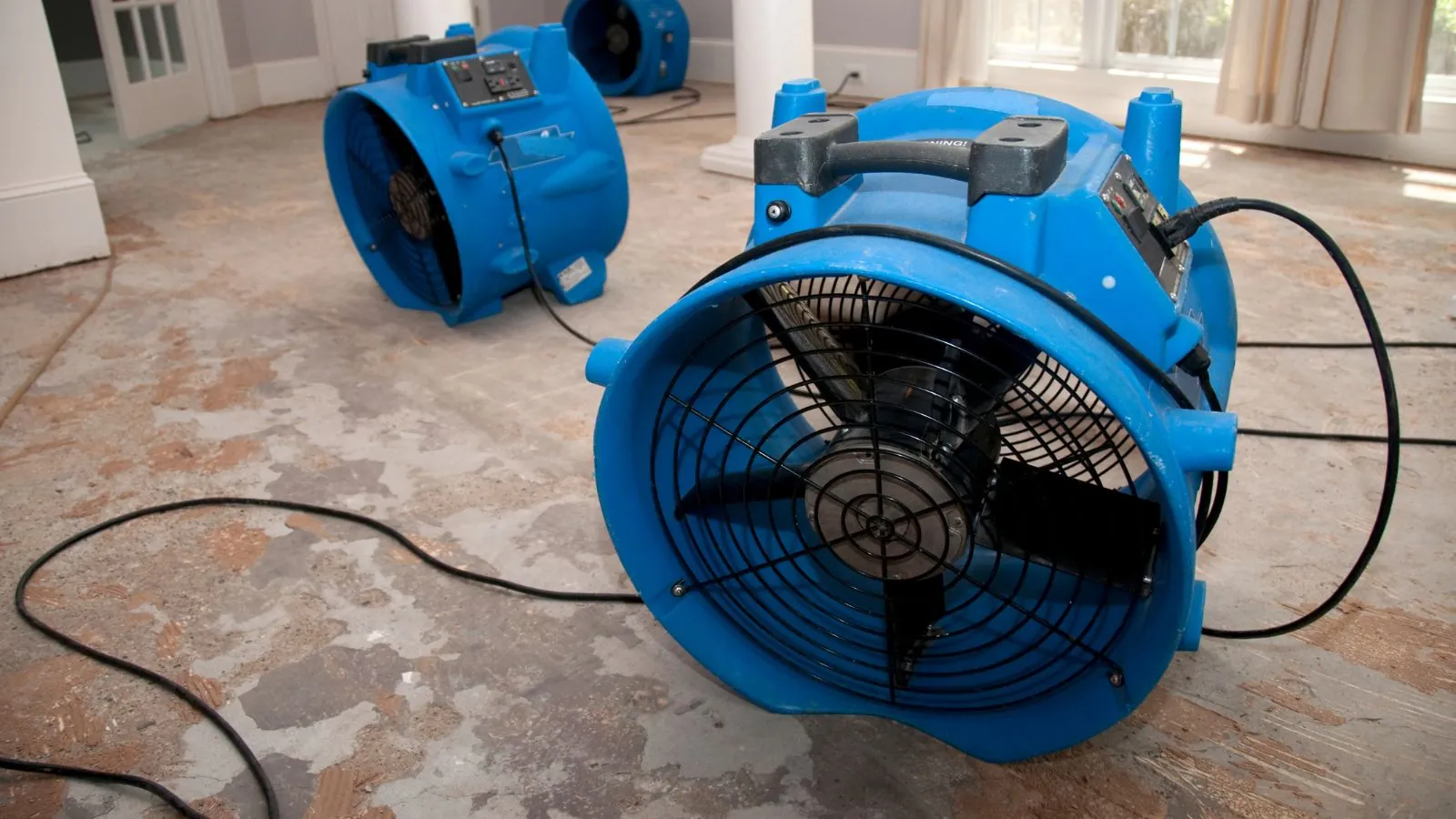
The carpet is released from the tack strip at the edges and floated on air movers so the pad and floor can dry.
Treat and dry
An antimicrobial is applied where the water category calls for it, then LGR dehumidifiers and air movers run until readings match dry areas.
Reinstall or replace
The carpet is stretched back down over a new pad, or a section is replaced if it did not clean up.
Keep the pad or replace it
Pad is cheap compared with the carpet, but the choice still matters.
Replace the pad
Most common choice after category 2 or 3 water, or if the pad stayed wet for days. It removes a hidden source of odor.
Dry the pad in place
Sometimes possible after quick clean water events. It saves cost but needs good readings to confirm.
Replace the carpet too
Right when backing has delaminated, fibers are stained or the water was contaminated.
Partial replacement
A damaged section can be cut and patched, but color and pile may not match the rest.
When mold turns up under the carpet
A common scenario is pulling up the carpet and finding dark spots on the pad or tack strip. Mold needs moisture, so it points to a leak or a wet subfloor that was not dried. We do not diagnose health effects, and any health questions go to a physician.
If the growth is more than a small spot, the floor and carpet may need to be handled under mold remediation. New York has the scope set by an independent assessor, and one person may not both assess and remediate the same property.
Stairs and wall-to-wall rooms
Stair carpet is tacked over wood treads and often glued at the risers, which makes it harder to lift and dry. Wall-to-wall carpet in a big room can usually be released from the tack strip as one piece, but it takes space and care to float it. Both are worth a careful meter check because the stair stringers and subfloor trap moisture.
What affects the cost
No fair estimate comes before someone has seen the room. These factors are real:
- The water category, which decides how much gets cleaned versus discarded.
- The area of carpet and pad that is wet.
- The carpet and pad quality, plus whether matching material is available.
- How long the room needs fans and dehumidifiers running.
- The subfloor and baseboard work that follows.
- Before any carpet is lifted, the crew explains scope and price, so the 24/7 line is the place to start.
Insurance and close to home
A sudden supply-line burst soaking the carpet is often covered, and a slow seep under it often is not. Surge and flood water are typically excluded without a flood policy, and a back-up through a drain tends to need its own endorsement. Your insurer can tell you which of these applies to you.
Water in a carpeted lower level near the shore may be outside flood water, and that changes the carpet decision sharply. If that is the cause, see flood damage restoration, and for carpet that sits in a lower level see basement cleanup. Neighbors in Greenvale can reach the same line.
Frequently asked questions
How long can wet carpet sit before it is ruined?
There is no set deadline. Clean water caught within roughly 48 to 72 hours has the best chance, but conditions change that, so a meter reading is the real answer.
Can carpet be saved after a toilet or sewage overflow?
Usually not. Contaminated water means carpet and pad are normally discarded, and sewage backup cleanup covers the rest of the area.
Do you always replace the carpet pad?
Not always, but often. Pad holds water and dries slowly, so after anything beyond clean water it is typically replaced.
What is an antimicrobial treatment?
It is a product applied to damp surfaces to limit bacterial growth while drying is underway. It does not replace drying.
Can you dry carpet without lifting it?
Sometimes, with extraction and air flow, if the water was shallow and clean. Readings under the carpet decide.
I found mold when I lifted the carpet. What next?
Stop disturbing it and call. The area will need assessment under S520 guidance, and a licensed NY assessor sets the scope.
Ready to talk it through? Call the 24/7 line.
☎ Call (516) 845-9582