
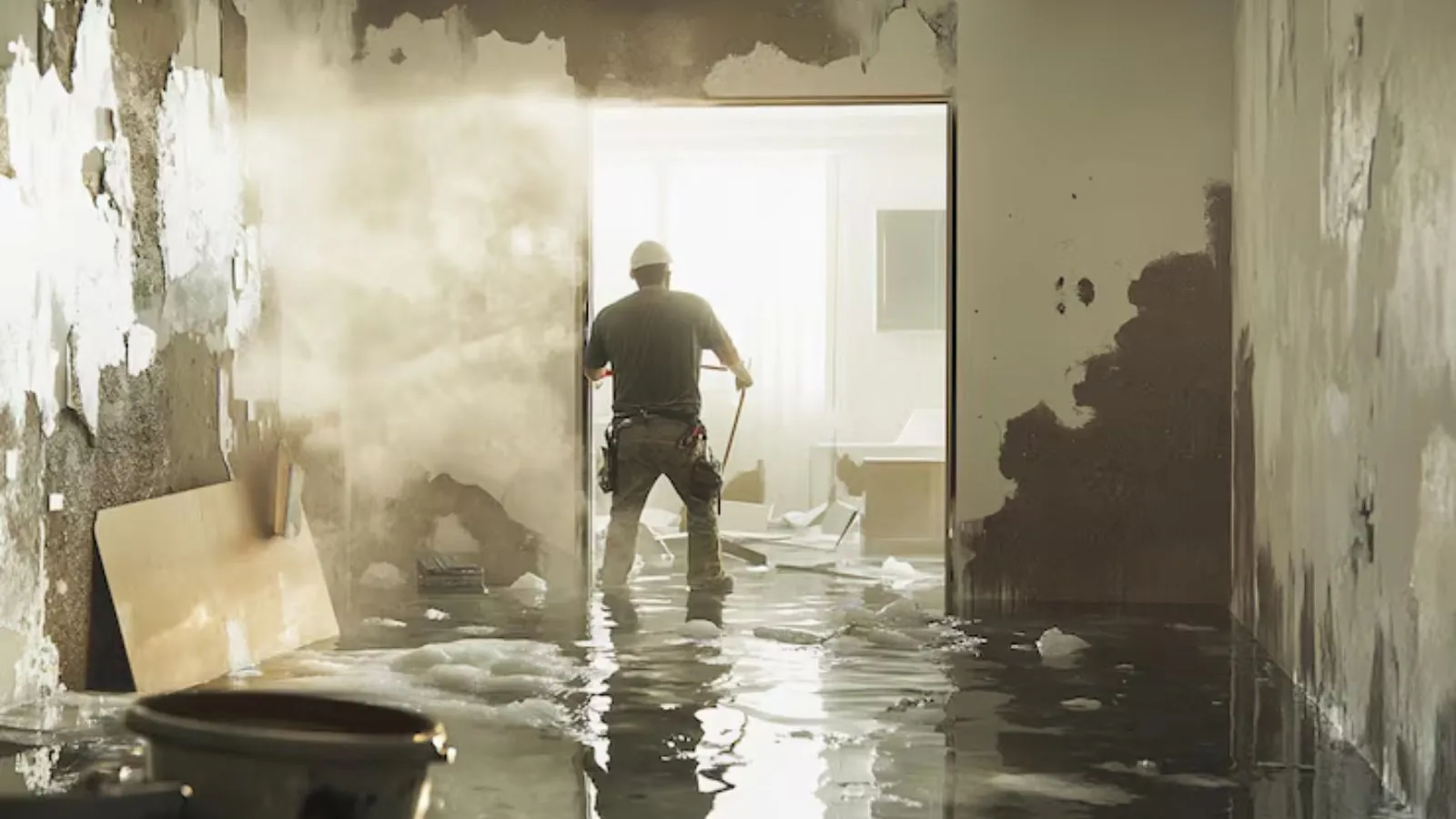
Water damage restoration in Beacon Hill, Port Washington starts with finding and stopping the source, then pumping out what is standing, then drying framing and finishes to a measured target. Beacon Hill is a residential neighborhood that the Town of North Hempstead civic association list places under Port Washington, with a Beacon Hill Residents Association and a Beacon Hill Bungalow Corp. among its entries.
This page is about the houses more than the weather. We have no storm record to cite for Beacon Hill, so nothing here claims the area floods. What follows is a plain guide to how water gets inside older homes, what a drying job involves, and what to write down before anyone starts cleanup.
Houses from the 1910s and 1920s
A 2015 Long Island Press feature on Beacon Hill's first century describes Tudor Revival homes from the 1910s and 1920s, including a house on Crescent Road designed in 1925 and others on Crescent and Summit Roads built in 1913 and 1914. That tells you the neighborhood has plenty of long-standing houses, and many of them have been renovated more than once.
Age alone does not tell us what is behind your walls or what your plumbing is made of. A renovated kitchen in a 1920s house can have new supply lines feeding old framing. When you call, describe what you can see, and let moisture readings, not the construction date, decide where drying equipment goes.
Where the water usually comes from
With no storm record for the neighborhood, the honest explanation is general. Water damage in a house like yours usually starts indoors.
Supply lines and fittings
A split braided hose or a loose fitting under a sink can wet a cabinet floor for days before anyone notices. A sudden break behaves differently, and burst pipe water damage describes it.
Water heaters
Tanks leak at the base or at the relief valve. Water heater leak cleanup covers the first steps.
Appliances
Dishwashers, washing machines and ice-maker lines are common culprits, often behind or beneath the unit.
Roof and window leaks
Water tracking down from flashing or a window frame can stain a ceiling far from the opening.
Toilets and sewer backups
A failing wax ring or a clogged drain line sends water, and sometimes sewage, across a bathroom or lower floor.
Questions about your situation? Call the 24/7 line and describe what you see.
☎ Call (516) 845-9582Safety first
Keep out of any standing water that could reach outlets, cords or a panel. Never flip breakers or run electrical equipment with your feet in water. Close the main water valve if you can reach it without risk. Smell gas or see sparking? Call 911 or the utility first. Sewage and other contaminated water belong to professionals, so skip the household fans and shop vacuum.
How extraction and drying work
Drying is measured work. The restoration team that takes your job should be able to show you numbers, not just run a fan.
Find the wet material
A moisture meter, sometimes paired with a thermal imaging camera, maps the wet walls, subfloors and cabinets.
Remove standing water
Extraction units pull free water first, because evaporating it is far slower. See water extraction.
Set air movers and dehumidifiers
Air movers sweep air over wet surfaces, and dehumidifiers collect the moisture that air picks up.
Log readings
Readings are recorded at each visit so the drying goal is a number on paper.
Confirm dry
Equipment comes out when the logged readings match dry reference points. Details are on the structural drying page.
Documenting for your insurer
Insurance rules are general here, so read your own policy and ask your insurer. State insurance regulators at New York's DFS say standard homeowners policies leave out flood, and back-up of sewers or drains is often an add-on.
- Shoot photos and video of every wet area before you touch anything.
- List damaged belongings room by room.
- Keep every receipt for emergency repairs.
- Hold on to damaged items until the claim is settled.
- Wait on lasting repairs until your insurer has looked.
- Write down who you spoke with and follow up in writing.
A short note on mold
Mold needs moisture, so the most useful step is drying wet material promptly. Anyone assessing or removing mold in New York needs a state licence, and one individual may not do the testing and the cleanup at the same address. Read mold remediation for how the two roles stay apart, and check any company's licence.
Permits and who to ask
The Town of North Hempstead Building Department handles building and plumbing permits in the unincorporated parts of the Town, and the Town's civic list files Beacon Hill under Port Washington. Before a rebuild that needs a permit, find out which building department covers your street.
For the broader picture, read about Port Washington water damage restoration. Ask about licensing and insurance when you call.
Frequently asked questions
Is Beacon Hill a flood zone?
This page makes no flood-zone claim. FEMA publishes a Flood Map Service Center where each address can be checked. A mapped zone is not a forecast for any one house in any one storm.
Do older houses always have more water problems?
No. Age does not tell us what is behind your walls, since many older houses have been updated. A moisture reading is the reliable guide.
What should I do before the restoration team arrives?
Photograph the damage, shut off the water only if it is safe and reachable, and move valuables out of the wet area. Keep damaged items for your insurer.
Who inspects mold after a water loss?
In New York, a licensed mold assessor defines the scope, and a different licensed person does the remediation. Ask any company to show its licence.
Can a slow leak be treated like a sudden one?
For drying, the work is similar, but insurers often treat gradual leaks differently from sudden ones. Read the policy, then ask the insurer.
Ready to talk it through? Call the 24/7 line.
☎ Call (516) 845-9582