
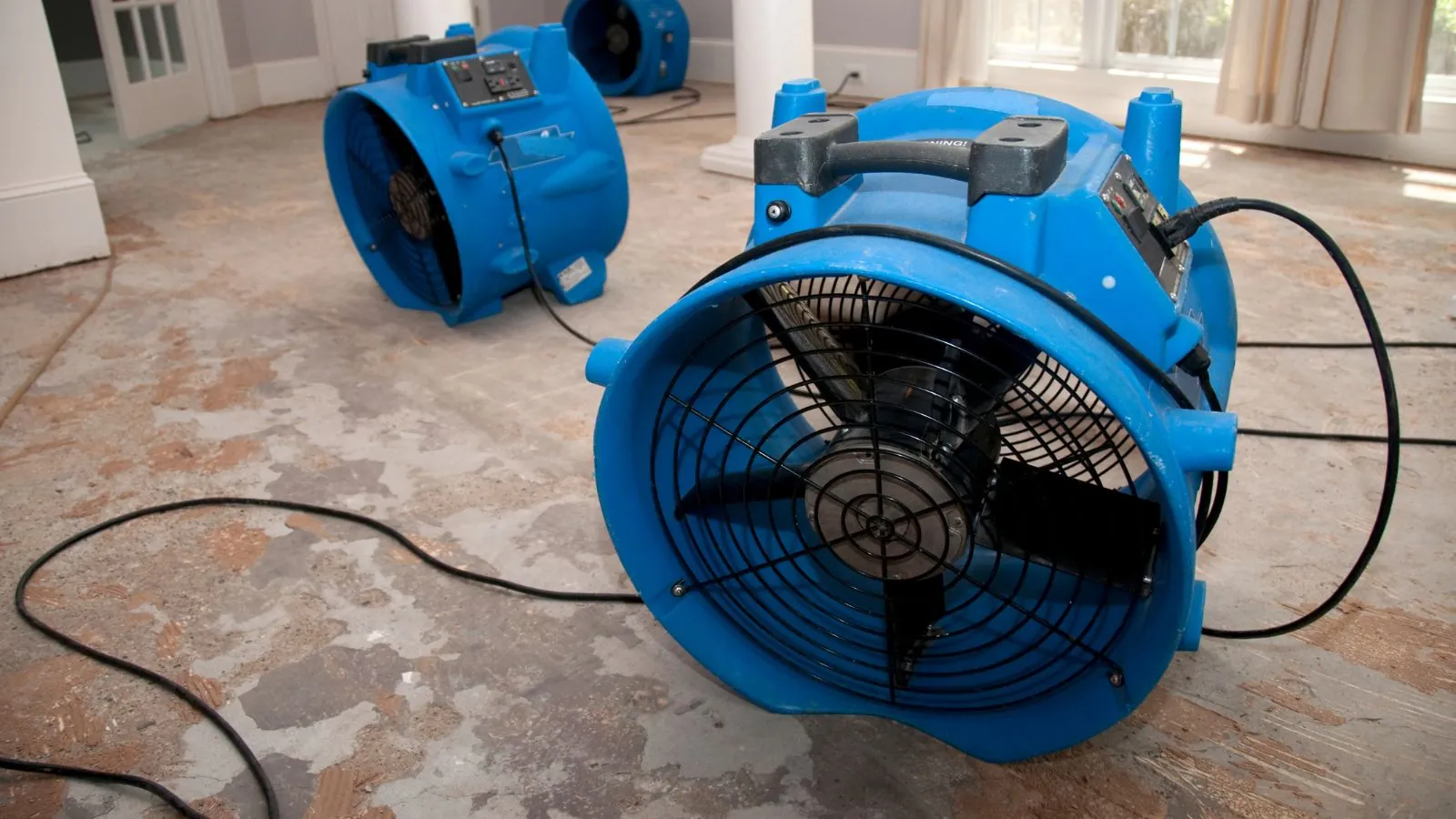
You can usually dry a small area yourself when the water came from a clean source, such as a supply line or an overflowing sink, and it reached only a few square feet of hard flooring or a small rug within a day. Anything involving sewage, outside floodwater, wet insulation, water inside wall cavities or a large area needs a professional.
The line between the two is not about effort. It comes down to the category of water, how long materials stayed wet, and what is behind the surface you can see. This guide sets out the decision in plain terms so you can act quickly and safely.
The decision at a glance
Start with where the water came from, then check the size and the materials.
| Situation | DIY is reasonable | Call a professional |
|---|---|---|
| Category 1: clean supply water, small spill | Yes, if caught early and limited to hard floors or a small rug | If it spread under cabinets or into walls |
| Category 1 over a large area | Not recommended | Yes, drying needs air movers and dehumidifiers |
| Category 2: dishwasher, washer or sump overflow | Only for very small, hard-surface spills with gloves | Yes, if carpet, padding or drywall is wet |
| Category 3: sewage or outside floodwater | No | Yes, always |
| Wet insulation or wall cavity | No | Yes, using pin and pad meters plus an infrared camera |
| Anything near electrical outlets or the panel | No | Yes, after the area is made safe |
What water category means
The published S500 standard sorts water into three categories. Category 1 is clean water from a source such as a broken supply line. Category 2 is water with some contamination, such as washing machine discharge. Category 3 is grossly contaminated, including sewage and floodwater from outside.
Water can move down a category as it sits. Clean water that soaks a carpet pad for a couple of days no longer behaves like clean water, because bacteria grow in warm, wet material. That is why speed matters even for a clean leak.
Questions about your situation? Call the 24/7 line and describe what you see.
☎ Call (516) 845-9582What you can safely do right away
If the source is clean and the area is small, these steps help and carry little risk.
Stop the source
Close the shutoff valve at the fixture or the main. Nothing else matters until the water stops.
Check electrical safety
Water reaching outlets or appliances means the room is off limits, and power goes off only at a dry panel you can safely reach.
Lift and move belongings
Move furniture, books and electronics to a dry room. Prop up furniture legs on foil or blocks if they must stay.
Remove standing water
Use towels, a mop or a wet vac made for water. Do not use a household vacuum.
Ventilate and run fans
Open windows when the weather allows and set fans to move air across the wet surface.
Take photos
Photograph the damage before cleaning, and note when the water started.
What not to do yourself
Stay out of any room with standing water near electrical outlets, appliances or the panel. Do not enter sewage-contaminated areas. Any sign of an electrical or gas hazard means phoning the utility or 911 ahead of the restoration line. Do not try to dry wet insulation or open wall cavities with a fan, because moisture stays trapped where you cannot see it.
Why fans and a dehumidifier are not the same as professional drying
A box fan moves air, but air alone does not pull moisture out of a wall or a subfloor. Professional drying combines air movers, LGR dehumidifiers and daily readings from moisture meters, so the crew can see what is wet and when it reaches a dry standard.
The page on structural drying explains the equipment and monitoring in detail. For wall-to-wall carpet, the choice often comes down to whether the pad can be saved, and our carpet water damage page covers that decision.
Hidden moisture is the main reason DIY drying fails. A floor can feel dry on top while the pad and subfloor underneath stay wet for days.
Warning signs that a small job is not small
Stop the DIY approach and call the 24/7 line if you notice any of these.
- The floor or wall still feels cool or damp after a day of fans.
- A musty smell appears even though the surface looks dry.
- Baseboards, paint or drywall begin to swell, bubble or stain.
- Water reached carpet padding, insulation or the space behind a cabinet.
- The water came from a toilet, a drain, a backup or outside the house.
- You cannot find the source or the leak keeps returning.
Insurance and permits
A fan-and-dehumidifier effort still needs paperwork. Photograph everything before you clean, keep receipts for emergency steps, and ask your insurer before any permanent repair. Your policy also spells out how it treats back-up and flood, and whether a slow leak counts.
Drying yourself is rarely the permit trigger. Replacing drywall, wiring or pipe afterward might be, and the answer comes from the office for your address, either the Town or a village.
What this means in Port Washington
Two kinds of offices handle permits here. The Town of North Hempstead enforces State and Town codes in the unincorporated area and takes applications through its MyToNH portal, with counter hours of 7 a.m. to 3 p.m. Manorhaven and Port Washington North publish applications of their own.
For you, that means the drying stage and the rebuild stage may answer to different offices. Finish drying, then ask the office for your street whether replacing drywall, wiring or plumbing needs a permit. The same applies in nearby places such as Roslyn Heights and Greenvale, where the permit office depends on your address.
Frequently asked questions
Can I dry a wet carpet myself?
For a small, clean-water spill caught quickly, sometimes. If the pad is soaked or the water was not clean, the carpet usually needs professional drying or replacement.
How long do I have before mold can grow?
Mold needs moisture, and wet materials left unattended for a day or two are at risk. Dry quickly, and see structural drying for how professionals verify dryness.
Is it safe to use a household vacuum on water?
No. Use a wet vac designed for water. A standard vacuum risks electric shock and damage.
What if the water came from a washing machine?
Treat it as Category 2 unless you know otherwise. That means gloves, careful cleanup, and professional help if carpet, padding or walls are wet.
Do I need a permit to dry my home?
Drying generally does not require one. Rebuild work such as drywall, electrical or plumbing may. Ask your Town or village building department.
Do Port Washington homeowners need a permit for a rebuild after water damage?
It depends on the work and where you live. Drying alone usually does not need one, but new drywall, wiring or plumbing might, so call the Town or your village office before hiring anyone.
Ready to talk it through? Call the 24/7 line.
☎ Call (516) 845-9582