
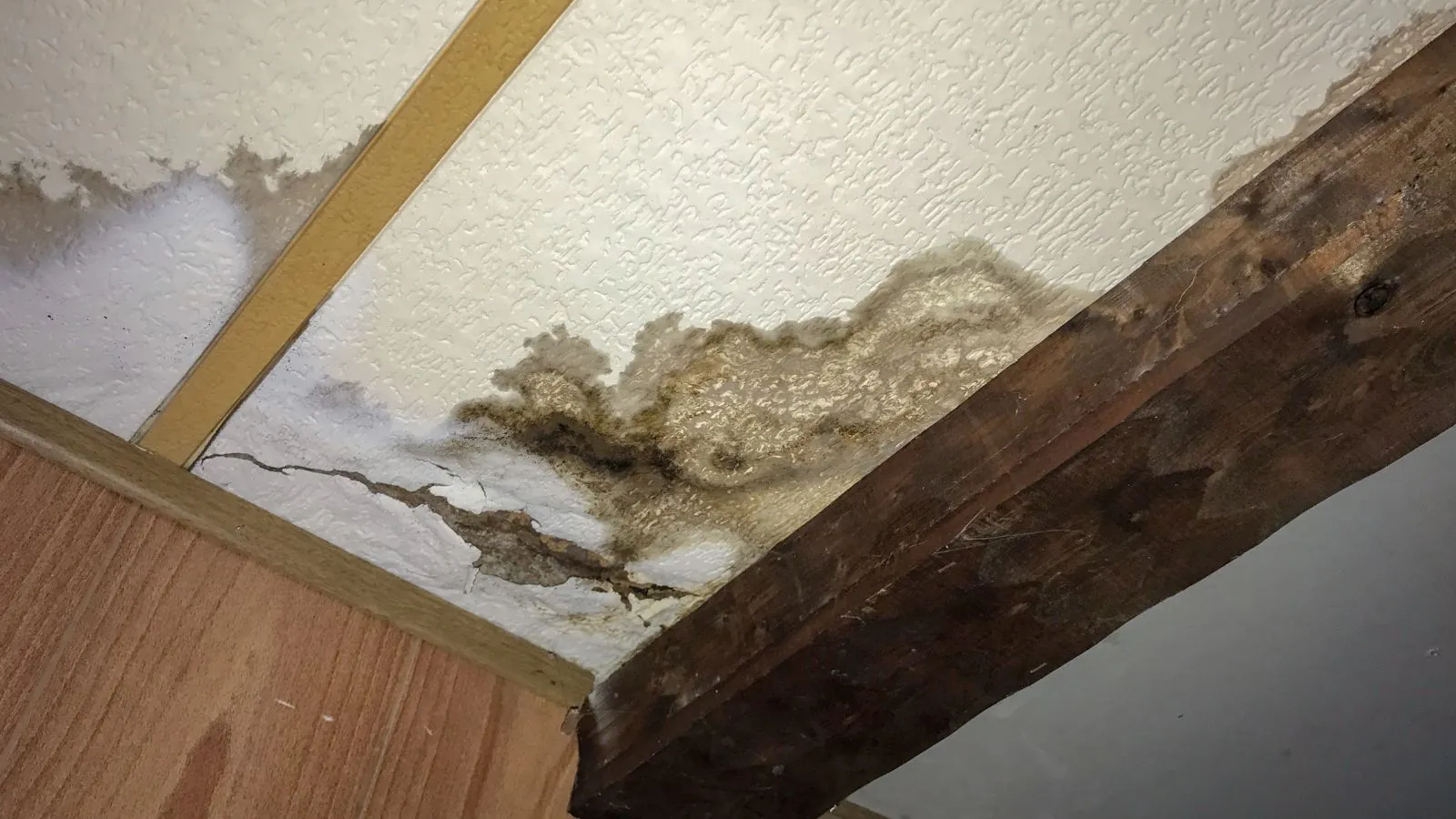
A hidden water leak is any leak you cannot see directly, such as a pinhole in a supply line inside a wall, a slow drip under a floor, or a failing joint above a ceiling. To find a hidden water leak in your house, look for the physical signs, run a water meter test with everything turned off, and check the usual suspects like toilets and ice maker lines.
Small leaks matter because they run around the clock. Wet drywall and framing stay damp for weeks, and damp materials are where mold and rot start. The sooner you locate the source, the smaller the repair.
Signs that water is going somewhere it should not
None of these proves a leak by itself, but two or three together are worth acting on.
Stains and discoloration
Brown or yellow rings on ceilings and walls often grow slowly. A ring that spreads after rain is a different clue than one that grows on a dry day.
Musty smell
A damp, earthy odor with no visible source can mean wet insulation or drywall nearby. It tends to be stronger in closed rooms.
Warped baseboards and floors
Baseboards that cup or lift, or hardwood that crowns, suggest moisture beneath. Check along walls that share plumbing.
Peeling paint or bubbling wallpaper
Moisture pushing out through a wall surface leaves bubbles, flaking, or a soft touch.
Higher water use with no change in habits
A bill that climbs without a reason is a prompt to run the meter test below.
The water meter test, step by step
This is the simplest way to tell whether water is leaving your pipes when no one is using it.
Turn off everything that uses water
Close faucets, stop the dishwasher and washing machine, and make sure no one flushes a toilet.
Find your meter
It is usually near where the supply enters the building or at the curb in a covered box. Use a flashlight and clear any debris.
Read the dial or leak indicator
Many meters have a small triangle or dial that spins when any water moves. Note the reading and take a photo.
Wait without using water
Give it an hour or two, then read again. A change means water is going somewhere.
Shut the main and test again
If the meter stops when the home's main valve is closed, the leak is inside the building. If it keeps moving, it may be on the supply line before the valve.
Questions about your situation? Call the 24/7 line and describe what you see.
☎ Call (516) 845-9582Check the usual suspects first
- Lift the toilet tank lid and add a few drops of food coloring, then see if color reaches the bowl without flushing.
- Inspect the supply lines and shutoff valves under every sink for drips and mineral crust.
- Look behind and beneath the refrigerator for dampness near the ice maker line.
- Check the washing machine hoses and the water heater base for moisture.
- Look at the ceiling beneath upstairs bathrooms and the walls around tubs.
- Listen for hissing or running water in quiet moments.
- Check outside hose bibs and any irrigation connections for leaks.
Tools that find what eyes cannot
A moisture meter reads how wet a material is, and a thermal imaging camera shows temperature patterns that often follow wet areas behind surfaces. Together they let a restoration pro map a leak without cutting random holes. Neither tool replaces a plumber for locating a pipe failure, but both show where the water has traveled.
If a ceiling is already stained or sagging, a ceiling water damage repair visit covers the drying and the repair. Keep people out from under any bulging area.
Plumber or restoration crew: who to call
The right first call depends on whether water is still flowing and whether materials are already wet.
| Situation | First call | Why |
|---|---|---|
| Meter spinning, source unknown | Plumber | Needs leak location and pipe repair |
| Water actively spraying or pooling | Shut the main, then plumber and restoration | Stop flow first, then extract |
| Pipe repaired, drywall or floor is wet | Restoration crew | Drying and monitoring |
| Stain with no known source | Plumber, then restoration | Find the source before drying |
| Burst pipe with standing water | Restoration crew | Fast extraction and drying |
If a pipe has failed outright
A sudden failure is a different case from a slow hidden leak. Closing the main valve, turning off electricity if the panel area is dry and safe, and calling the 24/7 line for burst pipe water damage stops the damage from growing.
For electrical risk or gas, call the utility or 911 before anything else. Do not enter a flooded space with live outlets.
After the leak is found
Repair the pipe first, then dry the area completely. Moisture readings should come back to normal before walls are closed. Photograph the damage and keep receipts, since your insurer may ask for them. Whether the repair and the wall damage are covered turns on your policy wording and how long the pipe was dripping, so call your insurer before you settle on a plan.
Homeowners in neighboring areas such as Old Westbury or Roslyn can follow the same steps, though the water utility in your town may differ, so check your own bill.
What this means in Port Washington
The Port Washington Water District reports that its service is 100 percent metered. For a homeowner in the district, that means a meter exists at your property and the meter test described above works. Read it with everything off, wait, and read again. If you cannot find it, call the district office or look at your bill.
The water district's April 2025 sampling put total hardness at 173 mg/L, the top of its reported range. Scale builds up inside older shutoff valves and around compression fittings, so turn each valve closed and open once during your hunt and check for white crust where a supply line meets a fixture.
Frequently asked questions
How long can a hidden leak run before it causes damage?
It depends on the flow and the materials. A slow leak can soak insulation and drywall over days or weeks. Mold needs moisture to grow, so persistent dampness is the real concern.
Can a leak be inside a wall without any stain?
Yes. Water can travel along pipes and framing before showing on a surface. A musty smell or a spinning meter can appear before any stain does.
Does a toilet leak show up on the water meter?
Often. A running toilet can use water continuously, which the meter test will show. The food coloring test confirms whether the flapper is leaking into the bowl.
What if the meter test shows no movement but I still see damage?
The leak may be intermittent, such as a drain, a roof or window leak, or condensation. A technician can scan the suspect wall with a pin-type meter and an infrared camera to trace the wet path back to its source.
Can hard water cause leaks?
Mineral scale builds up on fixtures and supply lines in hard water areas and can make shutoff valves stiff or leaky. Exercising valves occasionally helps you find a sticking one before an emergency.
Is the Port Washington water meter test different?
The process is the same. The Port Washington Water District serves its customers by metered service, so there is a meter to read. If you are unsure where yours is, ask the district or check your bill.
Ready to talk it through? Call the 24/7 line.
☎ Call (516) 845-9582