
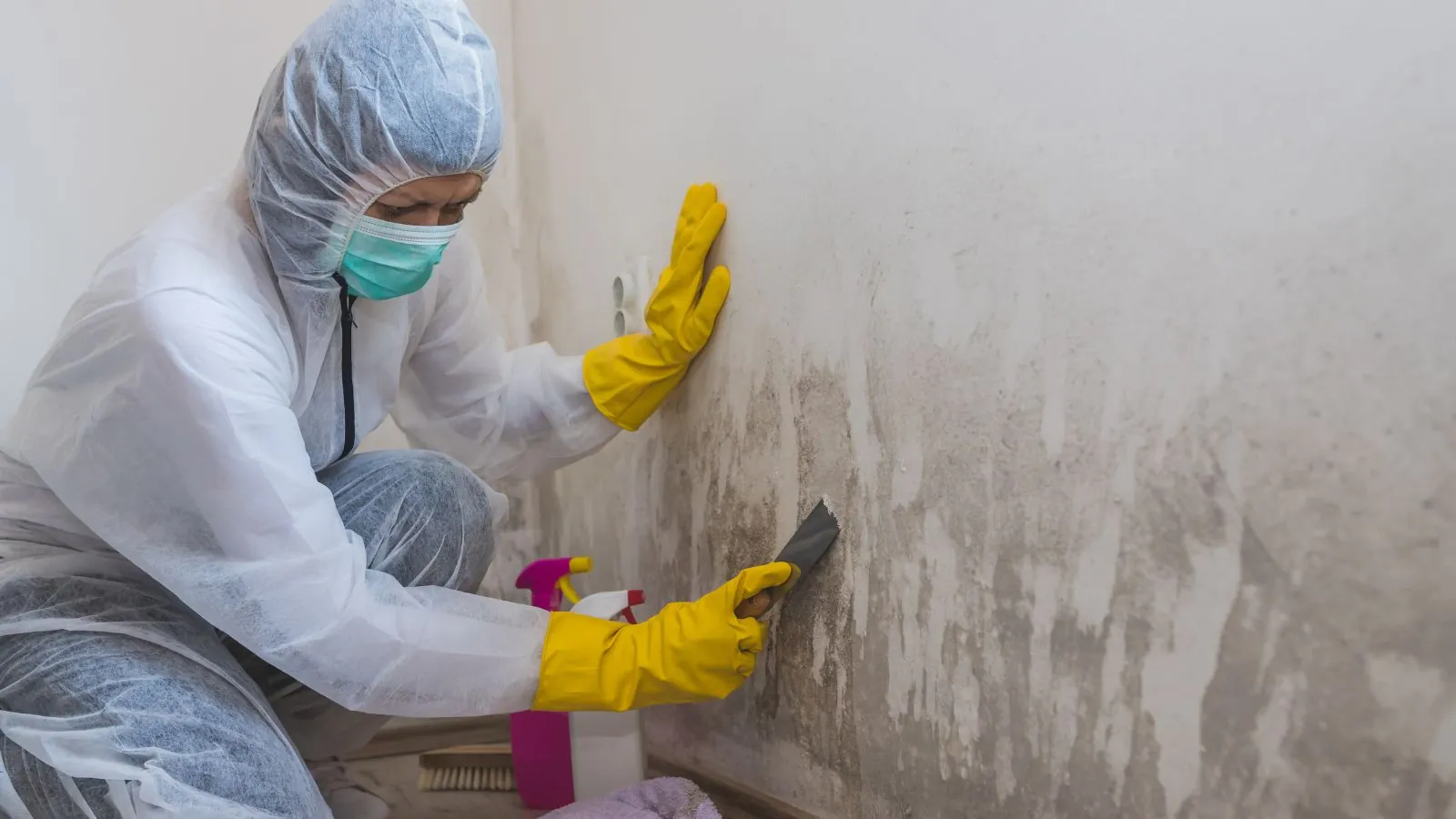
To get rid of mold, you have to remove the moisture that feeds it, then clean or remove what the mold has grown on. Wiping a stain without fixing the leak behind it only buys a short pause. Mold is a type of fungus that grows on damp organic material such as drywall paper, wood, and dust, and it needs moisture to keep growing.
What you do next depends on how much is affected and where. A few small spots on a hard, non-porous surface are a different job from a patch spreading across a ceiling or into a wall cavity. This guide walks through the order of operations, how to size up the problem, and where New York State licensing rules come in.
Start with the water, not the stain
Every mold problem has a water story. It might be a slow plumbing leak, a roof or window leak, a wet basement wall, a bathroom with weak ventilation, or a flood that was never fully dried. Until that source is found and stopped, cleaning is temporary.
Look for the cause before you buy any product. Check under sinks, around tub and shower edges, along exterior walls after rain, and above ceilings that show brown rings. If the area is still damp, the first job is drying it, and that is where professional structural drying with moisture meters and dehumidifiers earns its place.
Six steps in the right order
This is the sequence most homeowners and restoration pros follow, adjusted for the size of the problem.
Stop the water source
Repair the leak, close the shutoff, or redirect the drainage. If you cannot find the source, bring in a plumber or a restoration company with a thermal imaging camera.
Photograph and note the area
Take pictures before you touch anything. They help with insurance records and show whether the area changes over time.
Contain the work area
Close the door, shut vents in that room, and avoid running fans that blow across the mold into other rooms.
Decide: small spot or larger area
Use the comparison below. Larger or hidden growth is a job for a licensed professional, not a spray bottle.
Clean or remove the affected material
On hard surfaces, damp wiping with detergent and water is the usual approach. Porous materials like soaked drywall or carpet padding are usually removed and bagged, not scrubbed.
Dry completely and recheck
Run dehumidification until materials read dry on a moisture meter. Look again after a couple of weeks, especially after rain.
Questions about your situation? Call the 24/7 line and describe what you see.
☎ Call (516) 845-9582Small surface spots versus larger areas
There is no single published square-foot cutoff in the Port Washington sources we rely on, so judge by the situation rather than a number. This table is a practical guide, not a legal test.
| Situation | Usual approach | Who handles it |
|---|---|---|
| A few small spots on tile, glass, or sealed surfaces | Fix the moisture, damp wipe, dry the area | Homeowner |
| Spots on painted drywall near a fixed minor leak | Fix the leak, clean, monitor, repaint only when dry | Homeowner, with caution |
| Growth spreading across a wall or ceiling | Independent assessment, then written remediation scope | Licensed assessor, then licensed remediator |
| Musty smell with no visible source | Moisture mapping, thermal imaging, possible assessment | Restoration pro or licensed assessor |
| Growth after sewage or flood water | Treat the water event first, then assess | Restoration pro and licensed mold professionals |
Before you scrub: what to avoid
Do not dry-brush, sand, or blast a moldy surface with a fan. Those methods push material into the air and across the house. Do not paint over mold or caulk over a damp area. Paint will peel, and sealed moisture keeps the problem alive underneath.
Put on gloves and goggles before touching anything, and keep kids and pets away from the area. For any health question tied to mold exposure, talk to a physician.
When a licensed professional is the right call
For larger areas, hidden growth inside walls, or anything tied to a flood or sewage event, a licensed mold remediation contractor sets up containment, uses HEPA air scrubbers, and removes affected materials under a written scope. S520 is the industry's published reference for this work, so ask a contractor if it follows that document.
A good contractor also explains what happens after removal. Rebuilding drywall, trim, and paint is a separate phase, and scope and price should be explained before work starts.
A short checklist for this week
- Find and fix the moisture source before any cleaning begins.
- Photograph each affected area from a few angles with a date.
- Check bathroom fans, dryer vents, and window seals for signs of trapped moisture.
- Keep indoor humidity steady with a dehumidifier in damp basements.
- Move stored boxes off basement floors and away from exterior walls.
- Ask any contractor for its New York State license before you sign anything.
- Keep records of every conversation and receipt in one folder.
Why drying matters as much as cleaning
Cleaning removes what is visible. Drying removes the condition that allowed growth in the first place. Materials that stay wet for days give mold what it needs, which is why quick water extraction and monitored drying are standard after any leak or flood.
No cleanup can promise mold will never return, because new moisture can always arrive later. What you can do is correct the cause, dry the structure fully, and keep humidity and leaks in check. If you are in nearby Roslyn Heights or elsewhere on the North Shore, the same sequence applies.
What this means in Port Washington
Before discussing price with any company serving Port Washington that offers to find and remove mold, ask for its state license. That one request screens out a lot of bad offers.
Expect paperwork from two sources: the assessor writes the plan and a different licensed firm carries it out. The assessor's findings come first and the remediator works from them. If you live in a neighboring village such as Old Westbury, the same rule applies, because it is a state rule rather than a local one.
Frequently asked questions
Can I get rid of mold with bleach or vinegar?
Neither fixes the moisture, and neither is a substitute for removing wet porous material. For small spots on hard surfaces, detergent and water with a thorough drying is the common approach. Read the label of anything you use and never mix cleaning products.
How do I know if mold is behind a wall?
Clues include a musty smell, paint that bubbles or stains, warped baseboards, and a wall that feels damp. Meters and an infrared camera can outline wet zones while the wall stays closed. Confirming mold itself is the job of a licensed assessor.
Will drying a room kill the mold?
Drying stops new growth because mold needs moisture, but it does not remove existing material. Affected porous materials usually still need cleaning or removal. Dry first, then follow the scope for the affected materials.
Is it safe to clean mold myself?
Many homeowners clean small surface spots on hard materials themselves, covering skin and eyes and keeping the area contained. Larger areas call for professionals. For health concerns, ask a physician, not a cleanup guide.
Does a Port Washington homeowner need a license to remove mold?
State licensing through the Department of Labor applies to people who assess or remediate mold for others, with a narrow exception for owners working on their own property. Ask to see the license of anyone you hire.
What does a mold professional do first?
A licensed assessor inspects, finds the moisture source, and writes a scope of work. A separate licensed remediator then carries out that scope. State rules keep those two jobs with different people on the same property.
Ready to talk it through? Call the 24/7 line.
☎ Call (516) 845-9582