
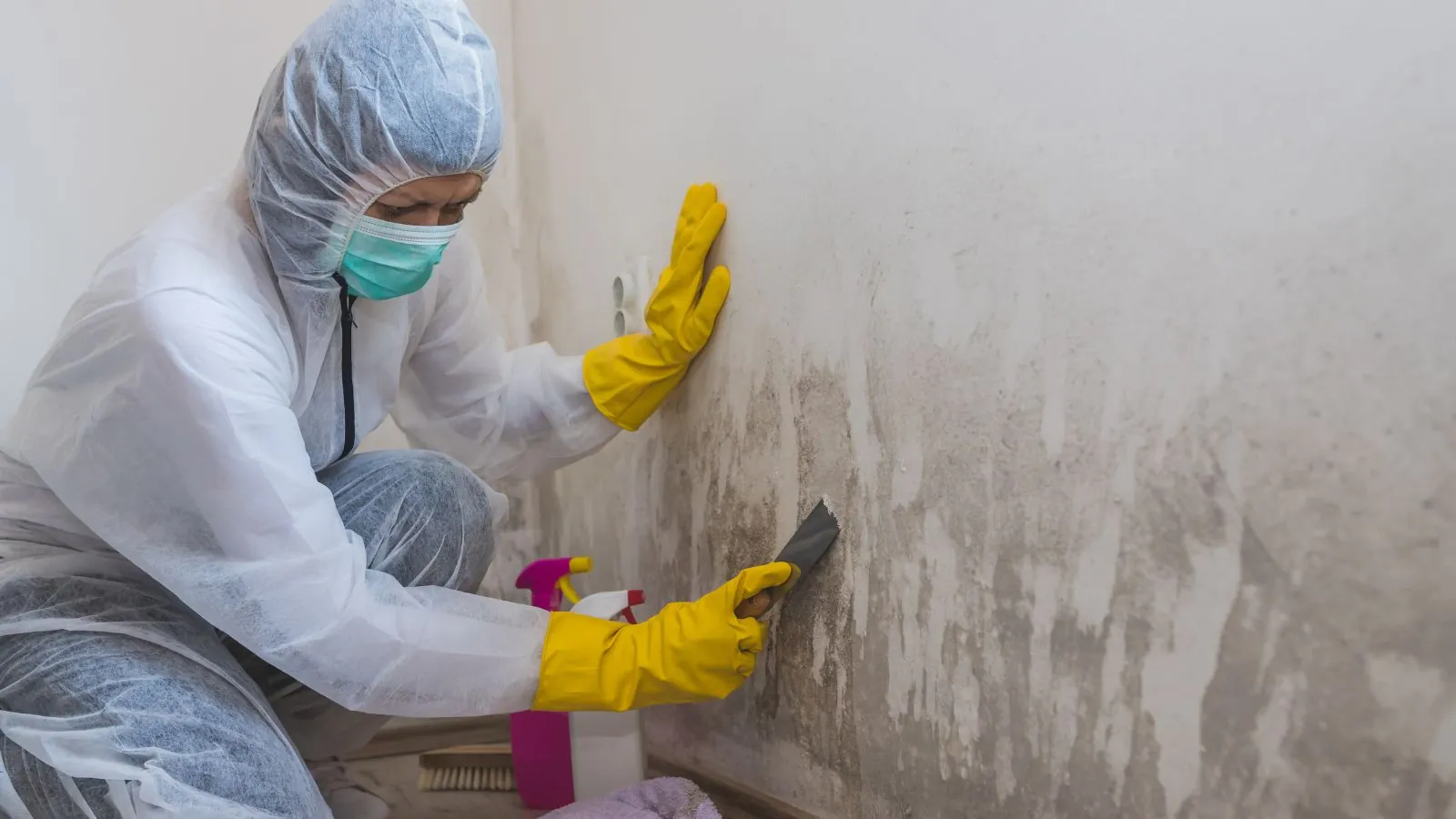
Mold cleanup cost varies widely because no two jobs involve the same amount of material, access, or moisture. The honest answer is that the price is built from the size of the affected area, the materials involved, the containment needed, and how much rebuilding follows. We are not listing dollar figures here, because any number published without seeing the property would be a guess.
What can be explained ahead of time is how a quote is assembled and why a New York quote often comes in two parts. Knowing the pieces helps you compare bids fairly and spot a quote that leaves out something important.
Why you may get two separate scopes
State minimum standards put the plan in the hands of an independent assessor, and the person who writes it may not also do the cleanup. Your budget therefore covers two different professionals.
The assessor writes the scope of work, and the licensed remediator prices that scope. Think of it like an architect and a builder. The assessor has no stake in how much work gets done, which is the point of the rule.
Cost factors that move the price
These are the real drivers behind a mold quote. Each one can raise or lower the total.
Size of the affected area
More surface and more cavity space means more labor, more material removal, and more air filtration time.
Type of material
Hard, non-porous surfaces can often be cleaned. Soaked drywall, insulation, and carpet padding are usually removed and replaced.
Containment and air control
Plastic barriers, negative air, and HEPA air scrubbers add setup time but keep the work from spreading into clean rooms.
Moisture source and drying
If the area is still wet, drying days and equipment come first. Mold needs moisture, so the source has to be fixed.
Rebuild scope
Drywall, insulation, trim, flooring, and paint after removal are usually separate from the cleanup itself.
Questions about your situation? Call the 24/7 line and describe what you see.
☎ Call (516) 845-9582How the two scopes line up
Here is how the work and the cost usually divide in New York.
| Phase | What it covers | What drives the price |
|---|---|---|
| Assessment | Inspection, moisture source, sampling plan, written scope | Property size, access, number of areas |
| Remediation | Containment, removal, cleaning, air filtration | Area, materials, containment, labor |
| Post-work check | Verification that the scope was met | Independent assessor visit, reporting |
| Drying | Moisture meters, air movers, LGR dehumidifiers | Days on site, equipment count |
| Rebuild | New drywall, insulation, paint, flooring | Finish level and materials chosen |
Questions that keep quotes comparable
- Does the quote reference the assessor's written scope, line by line?
- Is the contractor's New York State mold license shown on the paperwork?
- Are containment, HEPA filtration, and disposal listed as separate items?
- Does the quote say what happens if hidden damage turns up behind a wall?
- Is rebuilding included, or listed as a separate phase?
- Does the contractor work to ANSI/IICRC S520 as the published mold standard?
- Is the bid broken into scope and price before anything starts?
Why cheap quotes can cost more later
A bid that skips the moisture source is the most common reason a job fails. If the leak behind the wall is still active, the new drywall will get wet again and the money is spent twice. A quote that does not mention containment or clearance deserves a follow-up question.
For more on what the work itself involves, see the mold remediation page. And because mold so often follows a leak behind a wall, repairs to water-damaged walls and drywall are usually part of the final bill.
What happens when the wall is opened
Many quotes are written before anyone has seen inside the wall. Once drywall comes off, the affected area is sometimes larger or smaller than expected. A fair contract says how that change is handled, who approves it, and how the revised scope is documented.
Ask for any scope change in writing before the extra work happens. If the change is large, a return visit from the independent assessor keeps the written scope and the actual work in step.
Does insurance help with the cost?
Sometimes. The cause of the moisture matters, and so do any mold or fungi provisions in your policy, which often carry limits. Ask your insurer before work begins, photograph the damage, and keep receipts.
We cannot say whether any claim will be approved. Your policy language and your insurer decide that. In the meantime, dry the area and stop the leak so the problem does not get larger while paperwork is pending.
Planning the spending without a number
Start by getting the assessment, since that document is the basis for every bid. Then ask two licensed remediators to price the same written scope. If the quotes differ sharply, compare line items before comparing totals.
Neighbors in places like Roslyn or Greenvale face the same two-part process, so the planning steps are identical wherever you live on the North Shore.
What this means in Port Washington
For a Port Washington homeowner, the practical result is two line items in the budget, one for the assessor and one for the remediator, instead of a single all-in figure.
Rebuilding may also need permits, and the issuing office differs between the unincorporated area and the villages. Find out which applies to you before the rebuild line is priced.
Frequently asked questions
Can I get a price over the phone?
A responsible contractor cannot price mold work without seeing the area and the assessor's scope. A phone conversation can explain the process and what information to gather, but the actual price needs a written scope.
Why is the assessment priced separately?
Because the assessor and remediator must be different people in New York, the assessor's fee stands apart from the remediator's bid.
Does the cost change if the mold is in the attic or crawl space?
Yes, access and ventilation matter. Tight or high spaces mean more setup time and slower work, which raises labor even when the affected area is modest.
Is rebuilding part of mold cleanup?
Usually not. Cleanup removes affected materials, and rebuilding replaces them. Ask whether a quote includes drywall, insulation, paint, and flooring or stops at removal.
Should the license appear on the quote?
It should be easy to get. Work offered without a Department of Labor license is a problem, so ask to see it before you compare bids.
How do Port Washington quotes differ from other places?
The pricing factors are the same. Rebuild permits are the one piece that can vary by address, so find out early who issues them for your street.
Ready to talk it through? Call the 24/7 line.
☎ Call (516) 845-9582