
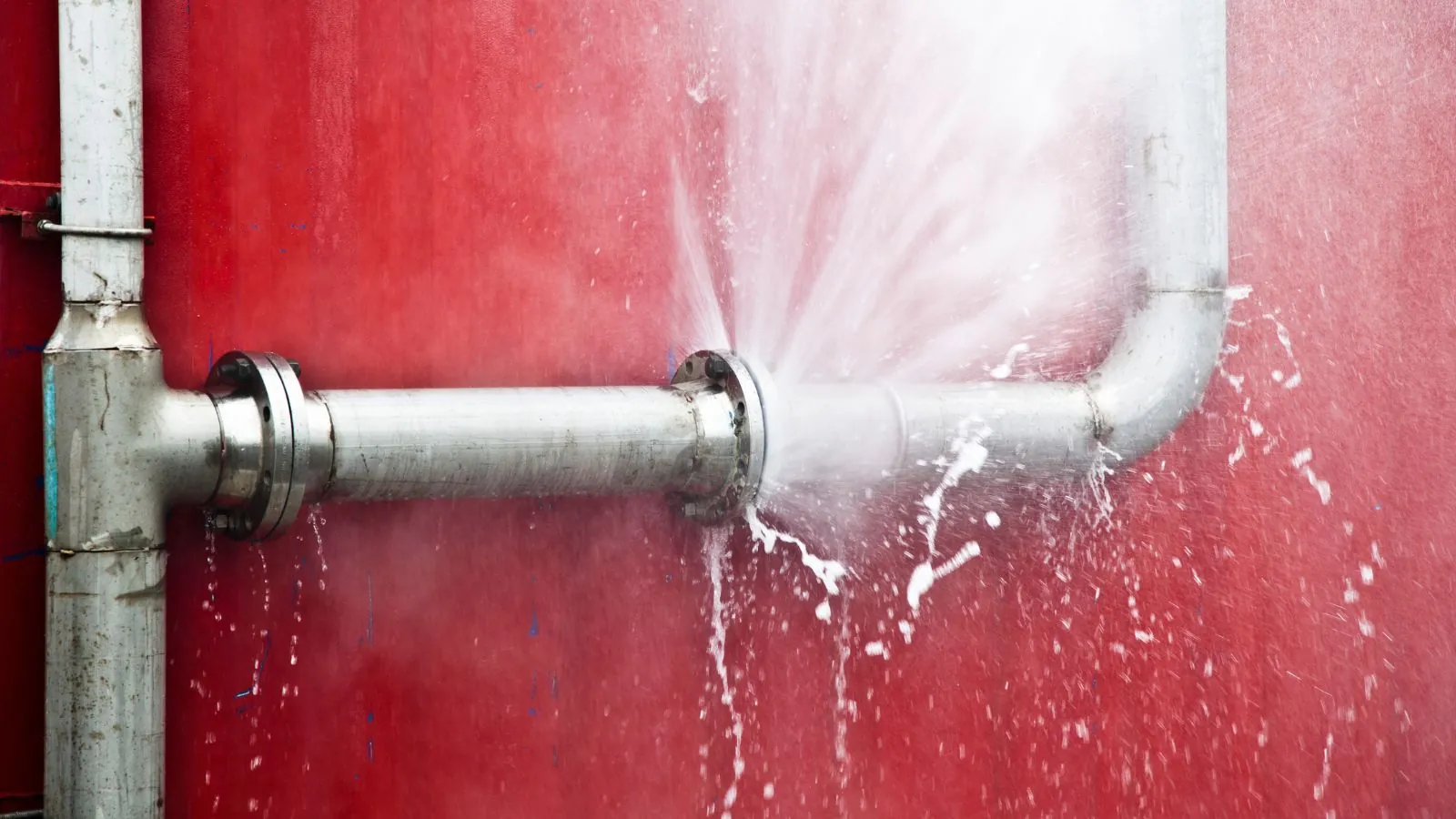
The best way to prevent water damage when you leave home is to shut off the main water supply, close or replace aging appliance hoses, confirm the sump pump works, set the heat for the season, and have someone look inside the house on a schedule. Those five habits cover most of what goes wrong while nobody is home.
Water damage while you are away is expensive for one reason: time. A small supply line failure that would be mopped up in ten minutes on a normal evening can run for days when the house is empty. This guide walks through the checklist in the order most people can do it, with notes for winter, heavy rain and what to do if you come back to a wet floor.
The pre-trip checklist
Do these before any trip longer than a weekend. Most take a few minutes and none need a plumber.
- Close the main supply valve before you leave, then run the lowest tap briefly so the pipes drain down.
- Look at washing machine hoses for bulges, cracks or rust at the fittings, and replace any that are old or stiff.
- Turn off the supply valves behind the washer, dishwasher and ice maker if you can reach them.
- Pour a bucket of water into the sump pit and confirm the pump starts and shuts off on its own.
- Set the thermostat to a steady heat setting for the season instead of turning the system off.
- Clear gutters and extend downspouts so roof water lands well away from the foundation.
- Give a trusted person a key, the location of the main shutoff and the number of someone to call.
- Take a photo of your water meter dial so you can compare it when you return.
Why shutting the main is the single biggest step
Every fixture in a house is connected to pressurized supply lines, and any of them can fail with nobody watching. Closing the main valve takes that pressure away. A failed toilet connector or braided hose then has nothing behind it.
The catch is that a main valve nobody has turned in years can stick or leak at the stem. Hard water leaves mineral scale on valves and fittings, so exercise the handle a few times before the trip and see that it closes fully. If it will not move, that is worth a plumber's visit well before you pack.
If you run a sprinkler system, a boiler or a water heater, ask your installer how to leave them for a long absence. Some systems need the main on, so do not guess.
Questions about your situation? Call the 24/7 line and describe what you see.
☎ Call (516) 845-9582Appliances that fail while you are gone
Not every leak is equal. These are the usual sources when a house sits empty.
Washing machine hoses
Rubber hoses weaken over time and can burst under full line pressure. Braided hoses last longer but still age.
Water heater
A tank that corrodes at the bottom can leak steadily. Look for rust streaks or damp floor around the base.
Dishwasher and ice maker lines
Small plastic or copper lines behind appliances drip quietly into cabinets and subfloors.
Toilet supply connectors
A loose or cracked connector can spray or drip for days. Check for damp at the wall valve.
Sump pump
A pump with a stuck float or no power will not move water out when rain arrives.
Winter absences on the North Shore
Winter on the North Shore brings hard freezes, which is the main risk for a house left unheated. A house left cold can freeze a supply line inside an exterior wall or an unheated garage, and the split often shows up only after the thaw. If that happens, the page on frozen pipe water damage explains what the cleanup involves.
Do not turn the heat off to save money. Keep it at a steady setting, open cabinet doors under kitchen and bathroom sinks on exterior walls, and ask your heating contractor what minimum setting suits your system. If the house has a room you rarely use, make sure its heat is on too.
Some owners drain the system for a long winter trip. That works only when done correctly, with the water heater and boiler handled as well, so get professional guidance first.
Heavy rain and the sump check
Rain does its damage at the foundation. Gutters that overflow, downspouts that drop water beside the wall, and a sump pump that fails all send water toward the basement. Walk the outside of the house before you leave and look for leaves in the gutters and splash blocks that have shifted.
Test the pump by pouring in water, and consider a battery backup if your basement has flooded before. Keep stored items off the floor and in plastic bins. If the worst happens, our page on burst pipe water damage covers supply-side failures, and a separate flood cleanup call applies when outside water gets in.
Smart sensors and who looks in
Technology helps, but a person still matters. Here is a simple setup order.
Place leak sensors where water starts
Put small battery sensors under sinks, beside the water heater, behind the washer and near the sump pit. They send an alert to your phone when they get wet.
Consider a shutoff valve with a sensor
Some systems close the main automatically when a leak is detected. Ask a licensed plumber what fits your plumbing.
Make sure the alerts reach a real person
A phone alert on a plane helps nobody. Add a neighbor or family member as a second contact.
Schedule a house check
Ask someone to walk through every few days. Have them look at ceilings, under sinks, the basement floor and the thermostat.
Leave written instructions
A note by the door with the main shutoff location, panel location and your contact details saves time in an emergency.
If you come home to water
Standing water near outlets, appliances or the panel is a reason to stay out and touch nothing electrical. Switch off power only at a dry panel you can reach safely, and if you suspect an electrical or gas hazard, phone the utility or 911 first. After that, shut the main, photograph everything and call the 24/7 line.
Insurance and record keeping before you leave
Homeowners policies often respond to a pipe that bursts while you are gone, but they tend to push back on slow leaks, and some attach conditions once a home sits vacant or unoccupied. Read those terms before a long absence and ask your insurer what it expects.
State insurance guidance stresses records and photographs. A short video of each room before you leave gives you a baseline if something does go wrong.
What this means in Port Washington
A News12 Long Island report dated September 2, 2021 described major flooding in Port Washington, with drivers abandoned in stalled cars. For a homeowner, the lesson is practical: heavy rain can arrive quickly, so check the sump pump and gutters before you leave, not after the forecast turns.
Water borders the peninsula on two sides, and homes in nearby communities such as Roslyn Heights and Old Westbury face the same winter freeze risk as the North Shore generally. Because every connection is metered, a hidden leak will eventually show on the bill, but only once the bill arrives. A photo of your meter dial before you leave is a cheaper way to check.
Frequently asked questions
Should I turn off the water at the main when I go on vacation?
For most homes, yes. It removes pressure from every supply line. Ask a plumber first if you have a sprinkler system or a boiler that needs water.
Can my Port Washington water bill show a leak while I am away?
Yes. The water district meters every connection, so a leak running while you are away shows up as a jump in use. Read the dial before and after a trip with everything off, and a moving dial points to a slow leak.
What thermostat setting should I use in winter?
Keep the heat on at a steady setting. Ask your heating contractor for the lowest setting that is safe for your system, and do not shut the system off.
Do smart leak sensors replace a house sitter?
No. Sensors alert you, but someone still has to respond. Pair them with a person who can enter the home and close the valve.
How often should someone check the house?
Every few days is a sensible rhythm for a long trip. Ask them to look at ceilings, under sinks and the basement floor, not just walk through.
Who do I call if a pipe fails while I am away?
Ask your house checker to shut the main and call the 24/7 line. For pipe failures, see burst pipe water damage for what cleanup involves.
Ready to talk it through? Call the 24/7 line.
☎ Call (516) 845-9582