
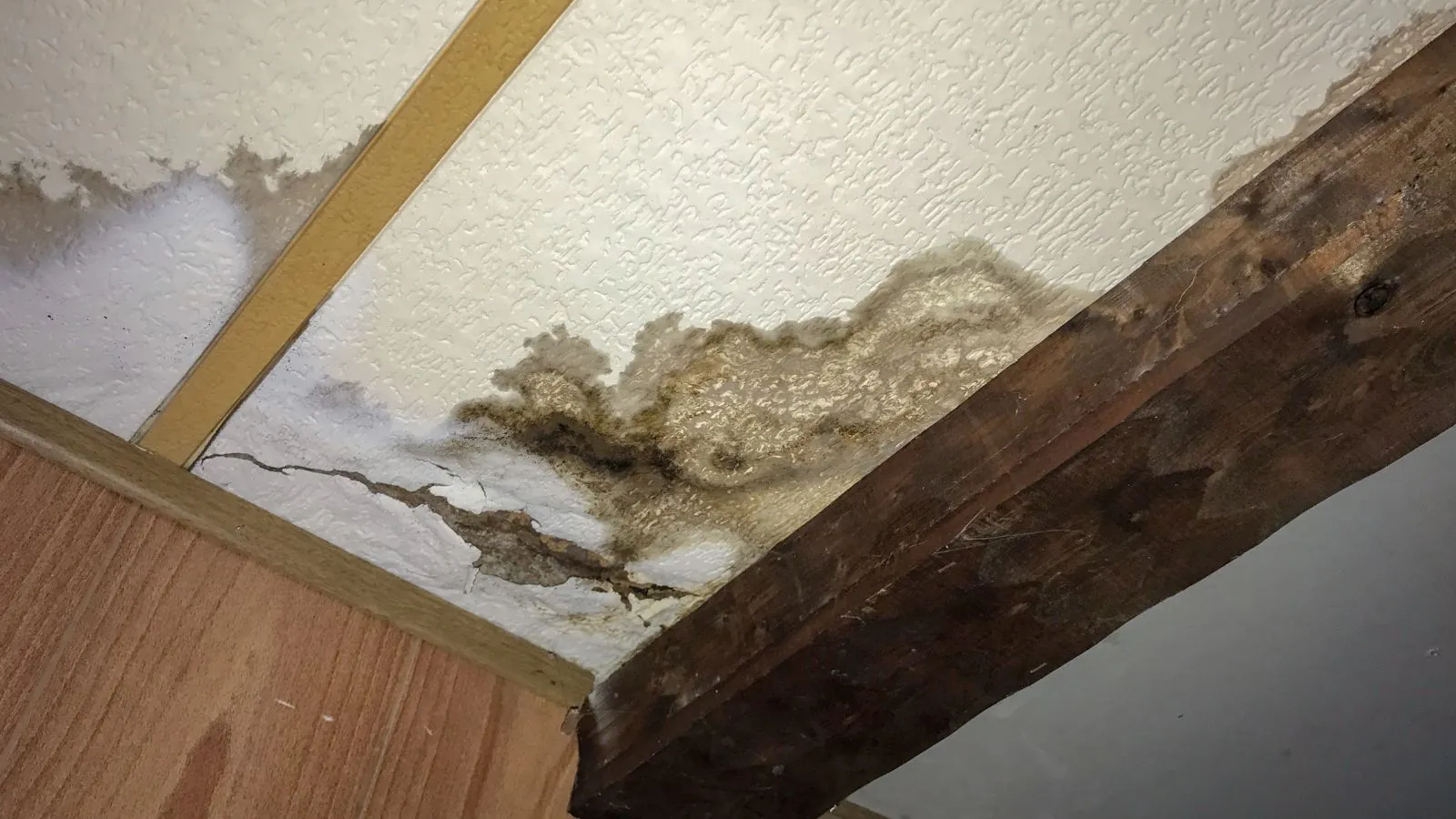
You find a damp patch around the base of the toilet, or a brown stain on the ceiling of the room below. Toilet leak water damage is harm to flooring, subfloor and the ceiling underneath caused by water escaping from the toilet, its supply line, its tank or the seal at the floor. Most small leaks can be stopped in a minute with the shutoff valve, and the real work is judging what the water already reached.
The leak source matters because each type behaves differently. A cracked supply line sprays clean water, while a failed wax ring seeps slowly and often hides under the flooring. Read on for the first moves, a way to tell the sources apart, and the point where a plumbing repair turns into a drying job.
What to do in the first few minutes
Keep these moves simple. The goal is to stop the water and protect yourself before any cleanup.
Close the shutoff valve
The valve sits on the wall or floor behind the toilet. Turn it clockwise until it stops, then flush once to empty the tank.
Check for electrical risk
Look at nearby outlets, fans and the light fixture in the room below. If water is near any of them, keep away from that area.
Soak up surface water
Use towels and a wet vacuum if you have one. Do not let towels sit soaked on the floor, since they hold water against the finish.
Photograph before you clean
Take wide and close pictures of the floor, the base of the toilet and any ceiling stain below. These help later with an insurer or a contractor.
Check the room below
Look for a ceiling stain, a bubbling paint patch or drips from a light fitting. If you see any, the water has already passed through the floor.
Electrical safety
If water drips from a ceiling light or fan, or an outlet below the bathroom is wet, stay out of that room. Switch off the bathroom circuits only when the panel is dry and close by. If you smell gas or suspect live wiring, the utility or 911 comes before the restoration line.
Questions about your situation? Call the 24/7 line and describe what you see.
☎ Call (516) 845-9582Supply line, wax ring or tank: telling them apart
The pattern of the puddle usually points to the source.
| Leak source | How it shows up | Hidden damage risk |
|---|---|---|
| Supply line or shutoff valve | Drips or spray near the wall, worse when the valve is open | Lower, since the leak is visible and stops when closed |
| Wax ring or flange seal | Water around the base, often after flushing | High, because water runs under the flooring |
| Tank bolts or tank-to-bowl gasket | Dampness at the back or underside of the tank | Medium, often found late |
| Fill valve or flapper that keeps running | No puddle, but a constant trickle sound | Low, though it wastes water |
How water reaches the ceiling below
Water follows gravity and the easiest path. It spreads over the bathroom floor, soaks into the subfloor around the toilet flange, and then travels along joists and through gaps around the drain pipe. From there it reaches the drywall below, which is why a ceiling stain can show up some distance from the toilet.
By the time a stain appears, the framing above it has often been wet for a while. If the stain is spreading, see how ceiling water damage repair is handled before you paint over it, because the cause and the wet insulation have to be dealt with first.
When a toilet leak becomes a restoration job
A mop and a plumber are enough for a small, caught-early leak. Move to professional drying when several of these apply.
- Water has reached the ceiling below or any wall cavity.
- The bathroom floor feels soft, spongy or lifts at the seams.
- Tile is loose or grout lines are dark and damp days later.
- Water stands in more than a thin film, so water extraction is needed.
- The leak ran for hours or an unknown time before discovery.
- A musty smell remains after the floor looks dry.
- The water came from a drain line or overflow rather than a clean supply.
Clean water, gray water and sewage
A broken supply line puts clean water on the floor, which is the easiest category to dry. An overflowing bowl or a leak from the drain side carries contamination, so porous materials are treated more cautiously and often removed. The category affects how much material can be saved, so describe exactly what happened when you call.
Skip the box fans, which spread contaminated water, and shut the door on kids and pets.
Mineral scale and shutoff valves
Mineral scale is one factor in toilet leaks, along with age, vibration and installation quality. Scale can build up on fill valve seats and supply line fittings, and it can leave a shutoff valve stiff or leaky when you finally need it. Turn each valve fully off and on once or twice a year while nothing is wrong.
If the valve will not move or drips at the stem, call a plumber rather than forcing it. A frozen valve is far better replaced on a calm day than on the day of a leak.
What this means in Port Washington
Water in town is on the hard side: the district's 2025 quality report gives 173 mg/L total hardness for the April 7, 2025 sample, across a range of 35.2 to 173. Mineral scale builds on fixtures and supply lines over time, so turn the shutoff valve under the tank once a year and inspect the fittings for crust or weeping. This is a general trend, not a diagnosis of any one leak.
Every connection is metered, which gives a simple test for a silent leak: shut off every tap and appliance and see whether the meter still moves. That quick check is useful whenever a toilet runs, a floor feels damp or a bill climbs. If you live nearby in Old Westbury or Roslyn Heights, your supplier and report may differ, so check your own water bill for the provider.
Frequently asked questions
Can a toilet leak damage the ceiling below?
Yes. Water can pass through the subfloor and into the ceiling drywall below, often along the drain pipe or joists. A ceiling stain means the water has already traveled.
How do I know if the wax ring has failed?
Water around the base after flushing, a loose toilet, or a damp or soft floor near the flange are common signs. A plumber can confirm by removing the toilet.
Is a toilet leak covered by homeowners insurance?
A sudden failure is often treated as a covered loss, while a slow leak over time is often excluded. What your policy says, and how your insurer reads it, settles that.
Can I dry a small toilet leak myself?
A thin film of clean water on sealed tile can often be mopped and aired out. Anything that reached the subfloor, the ceiling below or a wall needs a closer look with a moisture meter.
Can I check for a silent toilet leak using my water meter in Port Washington?
Port Washington Water District service is fully metered, which helps. Turn off every fixture, note the meter reading, wait without using water, then read again. Movement suggests a leak, and a running toilet is a common candidate.
When should I call a plumber and when a restoration company?
Call a plumber to fix the source and a restoration company to dry whatever got wet. When both are needed, stop the water first and book drying quickly so the subfloor does not stay damp.
Ready to talk it through? Call the 24/7 line.
☎ Call (516) 845-9582