
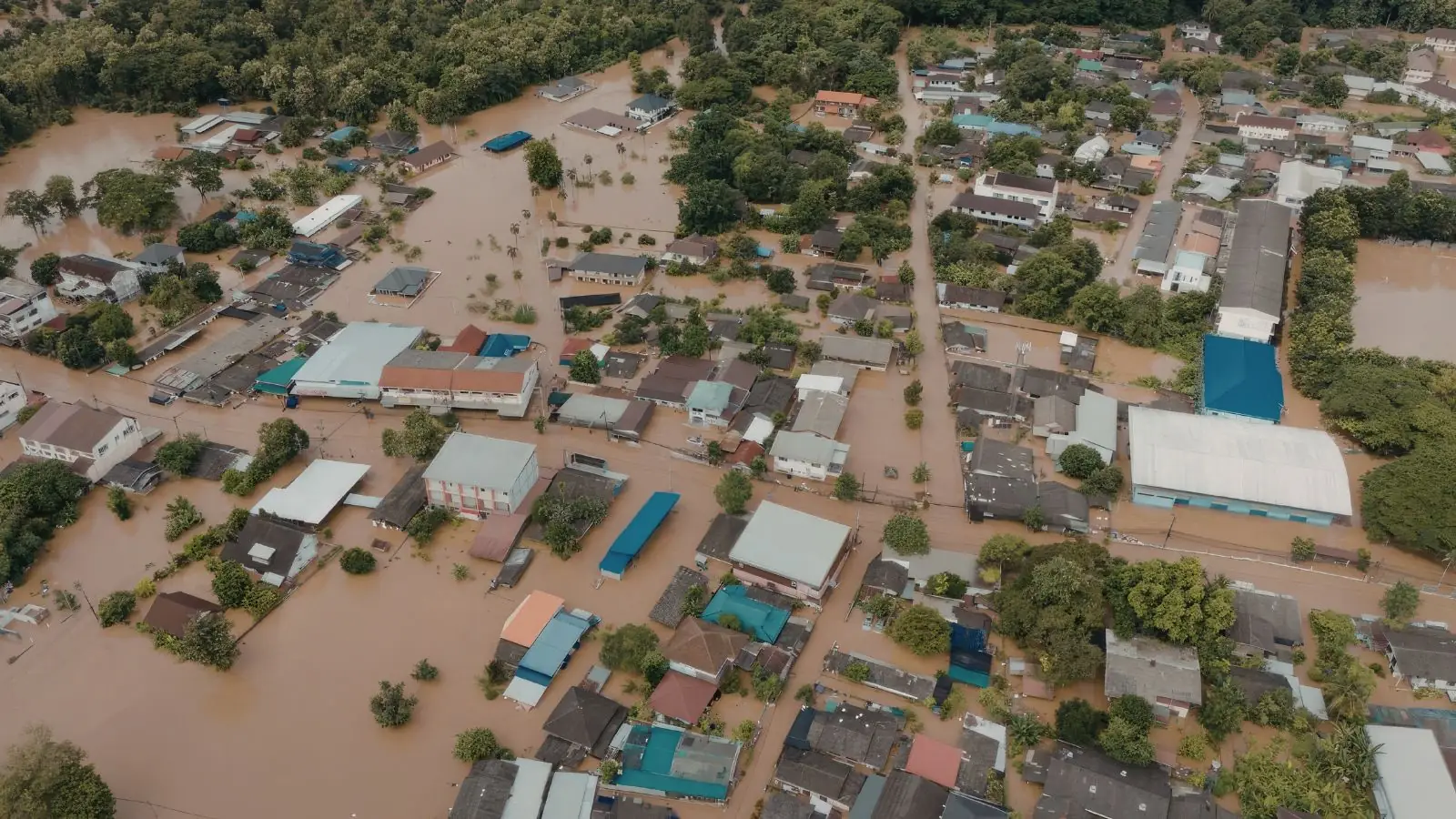
Sands Point is an incorporated village in the Port Washington area, with Village Hall at 26 Tibbits Lane under ZIP 11050. Water damage restoration here means removing standing water, drying wet structure with measured equipment, and documenting the loss so you can talk to your insurer. The village site says its post office, school district and fire department are Port Washington's.
This page covers both ways water gets into a Sands Point house: the tidal and storm side, which the county has written about, and the ordinary side, a failed hose or a leaking roof. For the wider picture, see our Port Washington water damage restoration page, or call the 24/7 line if water is on the floor right now.
What the county hazard plan says about the shoreline
The Nassau County Hazard Mitigation Plan includes an annex for the Village of Sands Point. It says the village shoreline faces Long Island Sound and Hempstead Harbor along with adjacent marshlands, and that flood-prone areas in the village are primarily located along the shoreline.
The same annex has a worksheet entry, undated, stating that Hoffstot Lane floods during storm-related tidal events and is the only egress for nearby homes.
It also notes shoreline erosion from storm action on the Sound and a slope over Hempstead Harbor that had dropped 10 feet in less than two years. If you live near the water, that means a storm can leave you with wet property and a blocked road at the same time, so tell the restoration team about access when you call.
A separate county appendix says Hurricane Donna in 1960 hit Manorhaven and Sands Point especially hard with power outages. That is an outage record, not a flooding record, but it is a reminder that sump pumps and dehumidifiers stop when the power does.
Before you touch anything
Stay clear of pooled water if outlets, cords or the panel might be in contact with it. Never flip a breaker or run a powered tool with wet feet. Shut the main valve only when you can get to it safely. For any sign of electrical or gas trouble, phone 911 or the utility. Sewage or contaminated water belongs to professionals, and household fans or a shop vacuum only spread it.
Questions about your situation? Call the 24/7 line and describe what you see.
☎ Call (516) 845-9582How a Sands Point job goes, step by step
Every loss differs, but the sequence below is how extraction and drying generally run, whether the source is a tidal surge or a split supply line.
Stop the source
The team confirms the water is off or the intrusion has stopped, and that the area is safe to enter.
Pull the water out
Extraction units remove standing water first. Pulling it mechanically is far faster than letting it evaporate. See water extraction for detail.
Map the moisture
Meters and a thermal camera show where moisture went inside walls and beneath flooring.
Set air movers and dehumidifiers
Air movers sweep air over wet materials, and dehumidifiers pull the released moisture out of the room. Structural drying depends on both.
Log readings daily
Readings are recorded each visit and compared to dry reference points. Equipment comes out when the structure reads dry, not on a set day.
Storm water versus water from inside
The source changes the cleanup, so it helps to know which one you have.
| Source | What it usually means | Related page |
|---|---|---|
| Tidal or storm water from outside | Treated as contaminated, with extra cleaning and removal of porous materials | Flood damage restoration |
| Roof or window leak in a storm | Wet insulation, ceilings and wall cavities | Storm water damage cleanup |
| Failed supply line or fitting | Clean water at first, but it spreads fast through floors | Burst pipe water damage |
| Drain or sewer back-up | Contaminated water, professional job only | Sewage backup cleanup |
Paperwork for your insurer and your village
Per the state Department of Financial Services, flood is generally outside a standard homeowners or renters policy. Any such protection would come from an added endorsement or its own NFIP policy, so read what yours includes. Nothing on this page predicts what any insurer will pay.
- Shoot photos or video of everything before you clean or move anything.
- Build an inventory of damaged belongings, room by room, with receipts where you have them.
- Keep every receipt from emergency work such as water removal.
- Do not toss ruined items yet, since the adjuster may want to see them.
- Leave permanent fixes alone until the insurer has inspected.
- Report the loss promptly and confirm each phone conversation in writing.
- Look your address up on FEMA's Flood Map Service Center before the next storm season. A mapped zone is no forecast of whether a particular storm will flood a particular house.
Mold and the permit question
Mold needs moisture, so the practical defense is drying the structure quickly and completely. Mold assessors and remediators both need state licences in New York, and one person may not perform the assessment and the cleanup on the same property. Before signing, ask the company about its licence. The mold remediation page explains how the work is usually staged.
Sands Point runs its own Village Hall and Building Department, which is the place to ask whether a repair needs a permit. Port Washington North is another community in the Port Washington area. Ask about licensing and insurance when you call.
Frequently asked questions
Is Sands Point part of Port Washington?
Sands Point is a separate incorporated village, yet the village website lists the Port Washington Fire Department, School District and Post Office among its services, and Village Hall carries ZIP 11050.
Does Hoffstot Lane really flood?
The Nassau County Hazard Mitigation Plan annex for Sands Point states that Hoffstot Lane floods during storm-related tidal events and is the only egress for nearby homes. The entry is undated, so it describes a pattern, not a particular storm.
Which office handles repair permits in the village?
Permit questions in the village go to its Village Hall building office.
Will my homeowners policy cover tidal flooding?
Probably not under a standard policy. The state Department of Financial Services points to a separate NFIP flood policy, so confirm with your insurer.
How do I know when drying is finished?
Readings are written down at every visit and compared with a dry sample of the same material. Once the wet areas match, the equipment goes.
Ready to talk it through? Call the 24/7 line.
☎ Call (516) 845-9582